


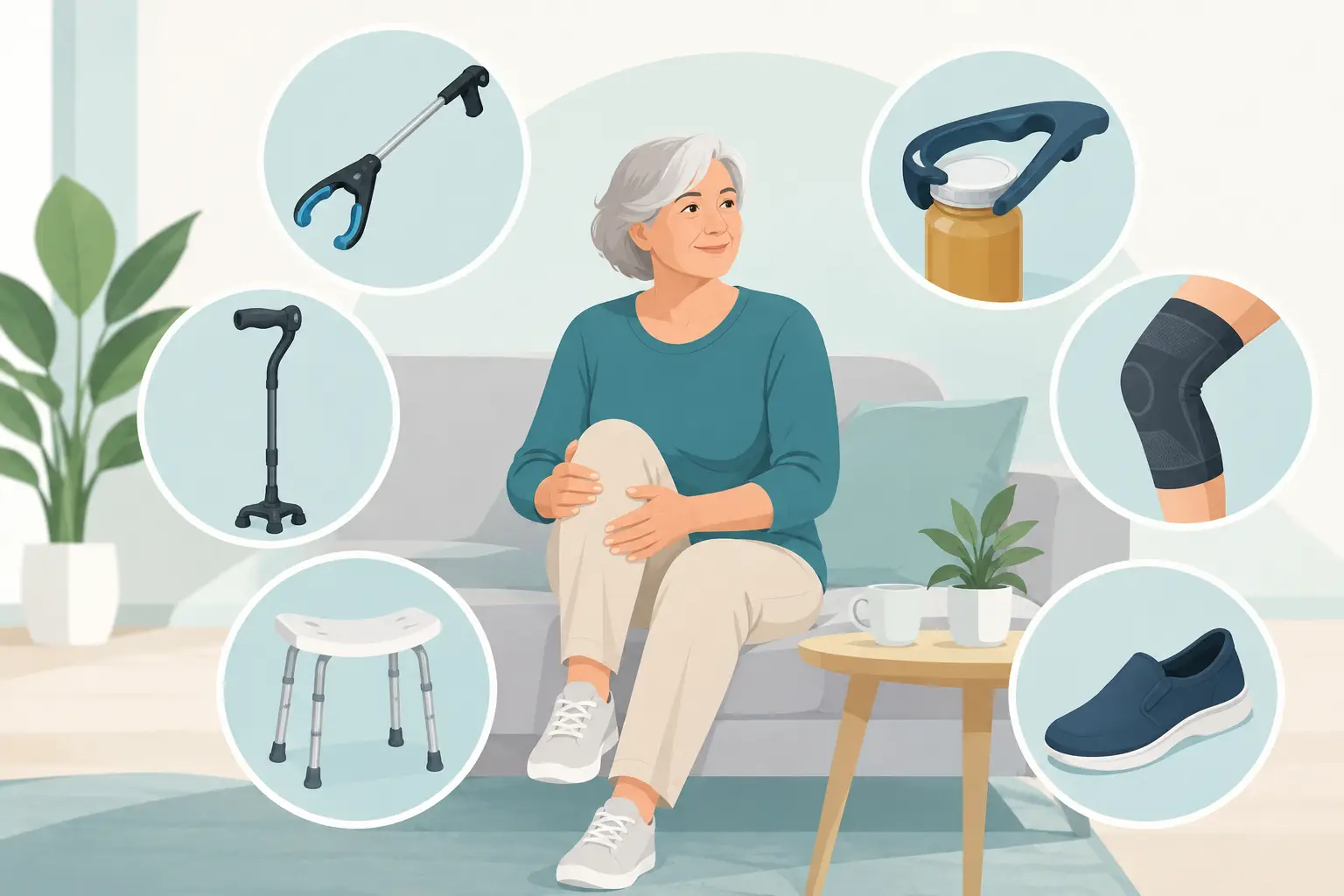
If opening a screw-top jar causes pain in your fingers, getting up from the sofa becomes a challenge or stepping into the shower feels unsafe, the best daily living aids for osteoarthritis are more than just comfort products. They can make everyday tasks easier, relieve strain on your joints and help you maintain your independence at home. The key is not to acquire as many aids as possible, but to target the barriers in your daily routine.
Osteoarthritis often affects the fingers, thumbs, knees, hips, shoulders or spine. The right solutions vary considerably, depending on which joints are affected and the severity of your symptoms, limited mobility or loss of strength. A reaching aid, for example, is no substitute for a secure grab bar in the bathroom, and a dressing aid is only useful if bending or reaching is actually difficult.
Daily Living Aids for Osteoarthritis: Choosing by Area of Life
It is best to start by looking at the tasks that regularly cause pain or uncertainty, or require help from someone else. For a few days, observe typical activities: personal care, getting dressed, meals, housework, moving around indoors and going out. This will help you identify specific needs and avoid unnecessary purchases.
Aids should not eliminate movement altogether. With osteoarthritis, adapted activity, movement guided by a doctor or therapist, and good management of physical strain remain important. Daily living aids help conserve energy by reducing awkward twisting, the need for a strong grip or deep bending, without unnecessarily restricting independence.
For Hands and Fingers: Reduce the Need for Grip Strength
With osteoarthritis of the finger and thumb joints, small, smooth or tightly closed items are often the most difficult to handle. Ergonomically shaped handles with a larger diameter distribute pressure more evenly across the hand. Cutlery with enlarged handles, non-slip mats and two-handled cups can make eating and drinking noticeably easier.
Useful aids for the kitchen and around the home include bottle and jar openers, key turners, reachers, and electric or easy-open can openers. A non-slip mat keeps bowls and plates in place, so one hand does not have to work as hard to hold them steady. If twisting movements are painful, a good opener is often more helpful than products that are simply especially small or lightweight.
It is also worth taking a closer look at personal care: tube squeezers, pump dispensers for soap and lotion, and toothbrushes with thickened handles reduce strain on the small finger joints. For more severe symptoms, a hand orthosis, for example to stabilise the thumb carpometacarpal joint, may be medically indicated. It should be professionally fitted, and how long it is worn should be discussed with a doctor, an orthopaedic technician or an occupational therapist.
For Knees and Hips: Get Up and Move Safely
For people with osteoarthritis of the knee or hip, low seats, long distances and a lack of support are common sources of strain. A raised toilet seat can make sitting down and standing up much easier by reducing the degree to which the hip and knee joints need to bend. It is important to choose one that is securely fitted, the right height and easy to clean safely.
In the living area, rising aids for armchairs or beds can help, provided the furniture is suitable for them. A firm seat cushion can improve seat height, but it must not slip or make the seat unstable. Dressing aids for socks and stockings, long-handled shoehorns and reachers are especially practical for people with limited hip mobility.
A cane, forearm crutches or a rollator may be suitable if you experience pain, feel unsteady or have a significantly reduced walking distance. These aids need to suit your height, grip strength and living situation. A rollator offers a seat and space for carrying items, but requires sufficiently wide paths and reliable brakes. In cramped homes, a lightweight cane may be the better choice. A healthcare professional should check that it is adjusted correctly and used safely.
Make your bathroom safe and easy on your joints
Bathrooms combine slippery floors, moisture, and the need to turn and maintain your balance. This increases the risk of falls, especially if you have osteoarthritis of the knee, hip or spine. A shower stool or chair lets you wash while seated and saves energy. Models with armrests provide extra support when standing up, but take up more space.
Grab bars by the shower, bathtub and toilet must be securely installed and able to support your weight. Suction-cup grab bars can be useful when travelling or for temporary support, but they are not a reliable substitute for professionally installed grab bars. For long-term use, the wall material, installation and regular checks all matter.
A non-slip mat, a long-handled bath sponge and a showerhead with an easy-to-use holder round out the equipment. A bathtub board or bath seat can make getting into a bathtub easier. Whether a shower, bathtub board or shower chair is suitable depends on your mobility, the width of the bathroom and the available space.
Reduce unnecessary strain in the kitchen and around the home
At home, strain often comes from carrying, bending and repeatedly reaching for things. Items you use often should be kept between hip and shoulder height. Heavy pots, crates of drinks and food supplies should not be stored in low cupboards if possible. A small kitchen trolley can transport dishes and meals, so you do not have to carry heavy items over long distances.
Lightweight pots with two easy-to-grip handles, cutting boards with features to hold food in place, and lever aids for taps can reduce strain on your hands and shoulders. If you have knee or hip osteoarthritis, a tall kitchen stool can help you alternate between sitting and standing for tasks such as preparing vegetables. However, sitting for too long can also be unhelpful if it makes your joints stiff. It is better to plan short, regular changes of position.
Safety should take priority over reach around the home. A reacher is suitable for picking up lightweight objects from the floor or from high shelves. It is not a safe solution for heavy, breakable or hot items. In these cases, reorganising your home, asking family members for help or, if appropriate, using a suitable service is a better choice.
How to choose the right aids
An aid is suitable if it makes a specific task safer or less painful and is actually used in everyday life. When choosing one, pay particular attention to weight capacity, slip resistance, ease of cleaning and whether it can be operated with limited grip strength. For mobility aids, also consider weight, width, brakes, seat height and the availability of replacement parts.
For aids closely related to mobility, care or fall prevention, we recommend seeking advice from a doctor’s office, therapist or qualified healthcare professional. Occupational therapists can assess everyday activities and teach techniques for working in a way that is easier on the joints. If medically necessary, certain aids can be prescribed by a doctor. Whether and to what extent your health insurance provider covers the costs depends, among other things, on the prescription, the aid and the terms of your insurance contract.
For family members and professional caregivers, the principle is: provide support only where it is needed. Taking over too many tasks can cause existing abilities to decline more quickly. The right combination of aids, home adaptations and enough time for daily routines often preserves more independence than taking over everything.
Small changes can make a big difference
Not every improvement requires a specialised medical product. Sturdy shoes with non-slip soles, light switches within easy reach, clear walking paths without loose rug edges and frequent breaks can make everyday life much easier. Periods when pain is mild or absent are often better for demanding tasks than times when morning stiffness or exhaustion is more pronounced.
Servomed offers daily living aids, mobility aids, and bathroom and care equipment in clearly organised product categories, making it easier to choose solutions according to where they will be used and the support required. Start with the task that takes the most energy: making it safer and easier can make everyday life not only simpler, but also more independent.

