


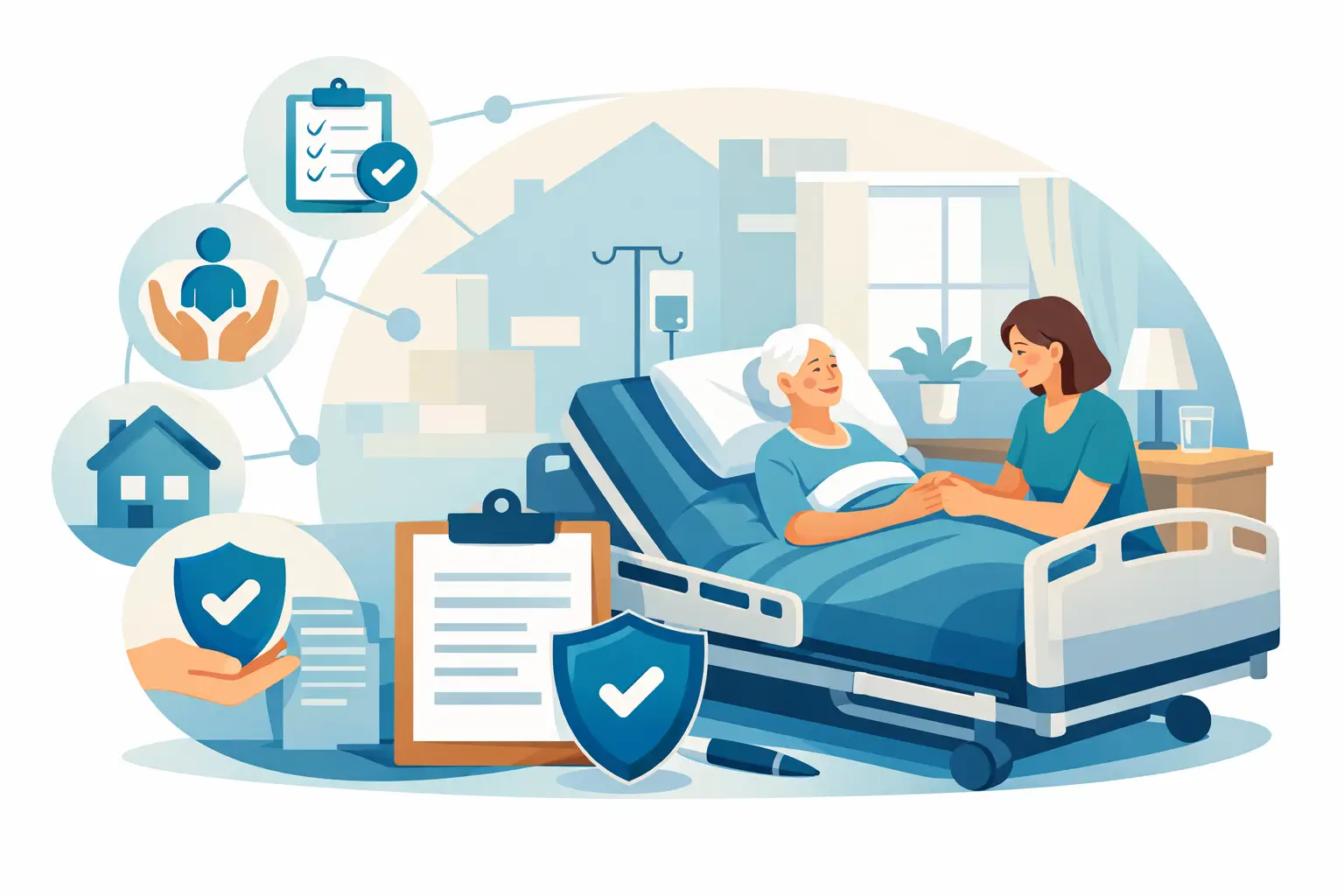
A care bed can make everyday life at home noticeably safer: when getting up, providing personal care, repositioning, and reducing the strain on family caregivers. Anyone wishing to apply for a care bed at home should document their individual care needs early and clarify before making a purchase whether the long-term care insurance fund or health insurer is responsible. Not every electrically adjustable bed is automatically approved as a medical aid.
When is a care bed medically or care-wise necessary?
A care bed is a technical aid for people who, due to illness, disability, or limited mobility, cannot be cared for safely in a conventional bed. Typical reasons include significantly limited ability to walk or stand, a high risk of falling, paralysis, neurological conditions, advanced dementia, or the increased effort required to transfer the person.
Age or an existing care grade alone is not decisive. The insurer assesses whether, in the specific case, the bed makes home care easier, alleviates symptoms, or enables a more independent lifestyle. For example, the electric height adjustment can help someone transfer safely from the bed to a wheelchair or make transfers easier on caregivers’ backs. Adjustable back and leg sections support appropriate positioning, for example in cases of shortness of breath, oedema, or limited physical capacity.
Side rails can help prevent someone from accidentally falling out of bed. However, they are not standard equipment for everyone. For people who are restless or have impaired orientation, the benefits, risk of falling, and potential restrictive effect on their freedom must be carefully weighed. Advice from nursing professionals, doctors, or a qualified medical aid provider is especially helpful in these cases.
Long-term care insurance fund or health insurer: Who covers the provision?
Whether the long-term care insurance fund or statutory health insurer is responsible depends on the purpose of the provision. If the main aim is to make home care easier, support independent living, or alleviate symptoms related to the need for care, the long-term care insurance fund is often the cost bearer. An officially recognised care grade and care provided in the home are generally required.
If the bed is needed primarily to treat an illness, for example for medically necessary positioning or to support a doctor-prescribed treatment, the statutory health insurer may be responsible. In practice, the distinction is not always clear. A doctor’s prescription with a clear justification makes it easier to determine responsibility and often speeds up processing.
People with private insurance should contact their insurer or benefits office in advance. Contract terms, reimbursement limits, and required documentation can vary considerably. For people with statutory insurance, the specific process also depends on the service providers with whom their insurer has entered into care agreements.
Apply for a care bed at home: The practical process
Start with a realistic assessment of the person’s needs. For a few days, note which situations in bed are difficult or unsafe: Is getting up only possible with considerable assistance? Does the person need to be repositioned regularly? Can family caregivers still transfer them without excessive physical strain? These specific details are more informative than a general description of the person’s care needs.
Then discuss the need with the GP’s practice, a specialist practice or an outpatient care service. Coverage through health insurance usually requires a doctor’s prescription. For coverage through long-term care insurance, an application for a technical care aid may also or instead be required. The long-term care insurance fund reviews each case individually and may consult the Medical Service.
A medical supply store or specialist provider can help you choose a suitable model and provide a cost estimate if needed. It is important not to place a binding order until coverage has been confirmed. Anyone who buys a care bed before approval risks having to pay all or part of the cost themselves.
The following documents are particularly helpful when submitting an application:
- a doctor’s prescription or medical statement specifying the diagnosis and purpose of the care
- information about the care level, if already assigned
- a description of limitations affecting transfers, repositioning and care
- if needed, a cost estimate from the intended service provider
The more clearly the documents explain why a standard bed is not sufficient, the easier it is for the insurer to assess the need. Statements such as “makes care easier” should therefore be supplemented with specific details, such as the need for height adjustment, regular repositioning or safe mobilisation at the edge of the bed.
Act quickly if care is urgently needed
A care bed may be needed at short notice following a hospital stay, a stroke or a sudden deterioration in health. In these situations, speak to the hospital’s social services team or discharge coordination team as early as possible. The treating doctor’s practice and outpatient care service can also document the urgency.
Provisional coverage is not governed in the same way by every insurer or in every situation. The responsible insurer should therefore be informed immediately. When planning a medical discharge, providing clear details about the required aid can prevent care at home from starting without suitable equipment.
Choosing the right care bed for care at home
A standard care bed usually has electrically adjustable back and thigh sections as well as height adjustment. These features are sufficient for many care needs. However, depending on the medical condition and living situation, additional features may be required, such as a low entry height to help prevent falls, a higher and safe working position for care, or a higher load capacity.
The sleeping surface should also be included in the planning. If there is an increased risk of pressure ulcers, a standard mattress may not be sufficient. A specialised pressure-relief aid, such as an alternating pressure mattress or a high-quality anti-decubitus foam mattress, may then be necessary. This aid is often assessed separately and should therefore not automatically be included as part of every care bed provision.
The room must also be suitable. The bed needs enough space for care, transfers and, where applicable, a wheelchair or walking frame. Power sockets, lighting and the route to the door should remain safely accessible. Also check whether rug edges, narrow passageways or loose cables increase the risk of falls. A care bed can only fully improve care if the surrounding environment is safe as well.
Costs, co-payments and loan arrangements
Technical care aids are often provided on loan. This is convenient because maintenance, repairs and subsequent collection are generally arranged by the provider. Whether a copayment is required, and how much it will be, depends on the responsible payer, the type of provision and any applicable exemptions.
Different rules apply to provision through long-term care insurance than to the provision of medical aids through health insurance. For people with statutory health insurance, a statutory copayment may apply unless they are exempt. Insured persons receive specific information before delivery from the health insurer’s contracted provider or directly from their insurer.
If you want a model with features or equipment beyond what is considered necessary, you may have to pay a share of the cost yourself. This may include special design options or comfort features that are not medically or care-related necessities. Always ask for an explanation of any additional costs in writing before placing your order.
After approval: delivery, instruction and adjustment
When the bed is delivered, it should be professionally assembled and its functions checked. Make sure you receive a clear explanation of how to operate it: height adjustment, back and leg adjustment, brakes, hand control and, where applicable, side rails. Family members providing care should also receive instructions, as incorrect use can lead to falls, entrapment or unnecessary physical strain.
During the first few days, check whether the bed height, mattress and positioning are actually suitable for the person’s needs. Changes in health may make adjustments necessary. If the bed is faulty, care needs increase or a move is planned, inform the provider or insurer promptly. Do not make any alterations to a loan bed yourself.
What should you do if your application is rejected?
A rejection should always be issued in writing and include reasons. Check whether the need was described in sufficient detail or whether any documents are missing. You can generally appeal a decision within one month. An additional medical opinion, an assessment by the care service or a detailed description of the person’s daily care situation can support your appeal.
If the provision remains unresolved, seeking advice again may also help. Sometimes the nursing bed itself is suitable, but the model requested does not meet the insurer’s criteria. Appropriate provision supported by clear reasons protects the person in need of care and also eases the burden on everyone who takes responsibility for their care each day.
A nursing bed is more than a piece of furniture. When chosen carefully and applied for properly, it creates safe conditions for rest, mobility and dignified care at home.

