


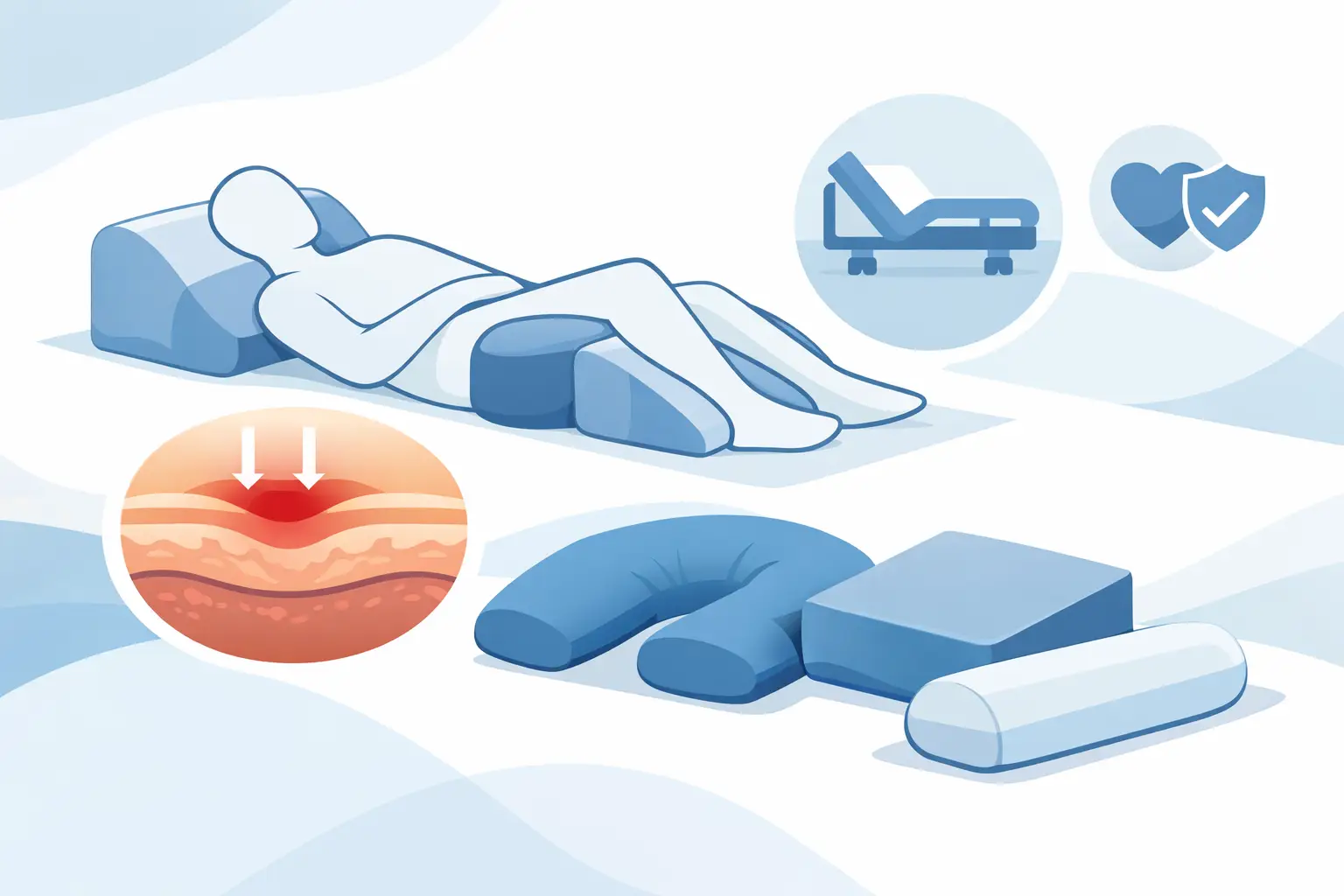
A positioning pillow can make the difference in everyday care between a stable, pressure-relieved position and a stressful posture that places undue strain on the body. When choosing the right positioning pillow for pressure ulcer prevention, you should therefore consider more than just its size or softness. The key factors are the individual’s risk of pressure ulcers, their mobility, the affected areas of the body and the overall care plan, including movement, skin checks and a suitable support surface.
Why positioning pillows are used to prevent pressure ulcers
Pressure ulcers develop as a result of prolonged pressure or a combination of pressure, shear and friction. Areas of the body with little soft tissue over bony prominences are particularly at risk: the sacrum, heels, trochanters in the hip area, ankles, knees, elbows and back of the head. Moisture, malnutrition, circulatory disorders, loss of sensation or limited ability to move independently can further increase the risk.
Positioning pillows are aids used to help prevent pressure ulcers. They redistribute pressure, specifically relieve vulnerable areas or stabilise a position that might otherwise be difficult to maintain. However, they are no substitute for a professional risk assessment or regular repositioning. For people at increased risk, a pressure-relieving mattress or alternating pressure system often remains a key part of care.
Correct positioning should do more than reduce pressure. It must also be safe, comfortable and practical for everyday use. A position that seems ideal in theory but causes pain, restricts breathing or needs constant adjustment is not a good long-term solution.
Choosing the right positioning pillow for pressure ulcer prevention: key criteria
Start by asking: Which area of the body needs to be relieved or stabilised? A pillow for the heels has different requirements from a positioning pillow for the 30-degree side-lying position or a roll used to guide the legs. General-purpose pillows can be useful, but specially designed shapes are often more suitable for people at significant risk or with existing skin damage.
Shape and intended area of use
Wedge-shaped positioning pillows, for example, support the 30-degree side-lying position. In this position, the person does not lie directly on the hip bone but is turned slightly backwards. This can reduce pressure on the trochanter while providing a stable position. The exact design must be suited to the person’s build, bed and mobility.
Rolls and elongated positioning pillows are suitable for relieving pressure on or supporting the arms and legs. Placed between the knees, they can prevent pressure points caused by direct contact. Used under the lower legs, they help keep the heels free of pressure. The pillow must be positioned so that it supports the calf without applying pressure to the Achilles tendon or heel.
Ring cushions and donut cushions may seem pressure-relieving at first, but they are generally not the right choice for preventing pressure ulcers around the sacrum or buttocks. The rim can increase pressure on the surrounding tissue and adversely affect circulation. A healthcare professional should always assess whether these products are appropriate.
Filling material: balancing adaptability and stability
A positioning pillow must adapt to the body without collapsing too much. Fillings that are too soft lose their support under pressure. Pillows that are too firm can create localised pressure, particularly for very slender people or those who are sensitive to pain.
Depending on their design, foam cushions offer good shape retention and can be used to support specific positioning. Viscoelastic materials respond to body heat and weight and can increase the contact area. Microbead or ball fillings are highly adaptable, but require careful shaping and regular checks because the filling can shift.
For practical care, the material alone is not the deciding factor. What matters is whether the cushion retains its function under the actual load. Its load capacity should be specifically checked, especially for people with a higher body weight or those lying down for long periods. A small cushion that gets flattened after a short time will not reliably relieve pressure on an at-risk area.
Size, body type and ability to transfer
The dimensions must suit the person receiving care and the intended use. A wedge cushion that is too short may not adequately support the upper body. An oversized model can overcorrect the position, put strain on the shoulder or make transfers more difficult. People with obesity often need wider, sturdier solutions; smaller cushions that can be positioned more precisely are often more comfortable for very slender people.
The care situation also matters. Can the person change position independently? Is positioning carried out by family members or nursing professionals? Does the cushion need to be removed for every transfer? Models with easy-to-grip, shape-retaining areas are easier to handle. In professional settings, the size and features should also fit the existing positioning and transfer plan.
Position also affects effectiveness
Even a high-quality positioning cushion can create pressure if used incorrectly. After each positioning, check whether at-risk areas are actually free from pressure or adequately relieved. Smooth out creases in clothing, bedding or incontinence products, as they can cause localized pressure.
When lying on the back, the heels and sacrum are particularly vulnerable. The heels should be completely suspended, not merely resting on a soft pad. When lying on the side, there should be no direct pressure on the bony prominence on the side facing down. When lying on the stomach or in a semi-prone position, breathing, medical lines, tubes, stoma care and individual contraindications require particular attention.
The often-cited fixed schedule for repositioning is not a universal rule. How often a position needs to be changed depends, among other things, on skin condition, independent movement, circulation, nutritional status, the mattress and the person’s tolerance. An individualized positioning plan that takes observable skin reactions into account is more reliable than a rigid routine.
Skin checks and comfort are essential
Check the skin regularly, especially in at-risk areas. Non-blanching redness, warmth, hardening, blisters, weeping areas or pain when touched should be taken seriously. If you notice any changes, seek medical or nursing advice promptly. If a pressure ulcer is already present, positioning must be incorporated into the treatment plan.
Comfort is not a minor consideration. Pain, restlessness or a feeling of slipping can lead people to change position on their own or cause family members to reposition them less often. Aim for a neutral joint position, unrestricted breathing and secure support without constricting the body. Individual guidance is particularly useful for people with contractures, spasticity, neurological conditions or severe pain.
Check hygiene and suitability for everyday use before buying
Positioning cushions are often used in direct contact with the skin and may come into contact with sweat, discharge or incontinence. A wipe-clean or washable cover is therefore very practical both at home and in care facilities. Check the care instructions: What washing temperature is permitted, is the cover suitable for tumble drying, and is a replacement cover available?
For care facilities, other relevant considerations include whether the surface can be disinfected, product labelling, reprocessing and the availability of identical models. In private homes, a quiet cover, a pleasant feel against the skin and a weight that family members can handle easily are often important. Easy-care products make it easier to provide hygienic care, but must not be so slippery that the person slides off them.
When professional advice is needed
If there is a high risk of pressure ulcers, existing pressure ulcers, significant immobility or complex comorbidities, product selection should not be made in isolation. A doctor’s prescription, care consultation, wound management specialist or medical equipment professional can help determine whether a positioning cushion is sufficient or whether additional measures are needed, such as a pressure-relief mattress, heel offloading, a seat cushion or other interventions.
Suitable documentation can also be crucial for coverage of the costs. Requirements for prescribed medical aids vary depending on the health insurance provider, care level, contractual partner and individual care needs. A precise description of the need supports the selection of a suitable product and helps prevent inappropriate provision.
A well-chosen positioning cushion works best as part of attentive care: observe positioning, check the skin, reduce pressure and take the affected person’s needs seriously. This makes pressure relief more than a one-off measure—it becomes a reliable routine that supports safety, comfort and dignity in everyday life.

