


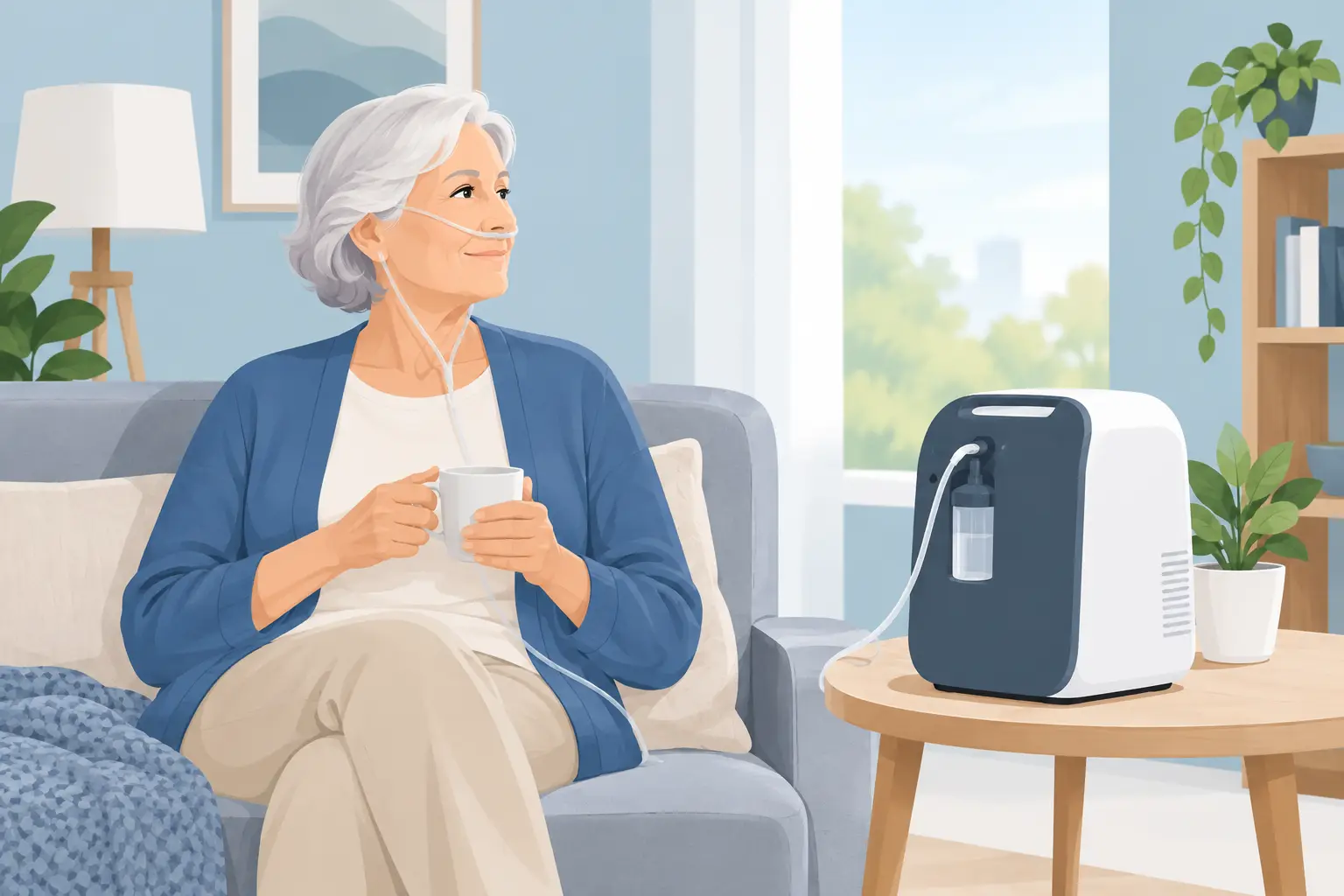
Anyone who depends on oxygen at home needs more than just the right equipment. Everyday life must run reliably: while sleeping, walking short distances around the home, attending a medical appointment and even during a power outage. This guide to home oxygen equipment helps patients, family members and care staff understand requirements and organise safe care at home.
Oxygen is a medicinal product. The flow rate, duration of use and delivery method must therefore be set solely in accordance with a medical prescription. An oxygen device cannot assess symptoms on its own or replace medical supervision. Its purpose is to reliably provide the prescribed oxygen therapy at home.
Which types of oxygen equipment are suitable for home use?
Oxygen concentrators and oxygen cylinders are used primarily for long-term oxygen therapy. The right system depends on the prescription, oxygen requirements, mobility and the conditions in the home.
Stationary oxygen concentrator
A stationary concentrator extracts oxygen from the ambient air and delivers it at the prescribed concentration through tubing and a nasal cannula. It runs on electricity and is designed to provide continuous oxygen in the home or care room. For many people, it is the foundation of their oxygen supply because it does not require regular deliveries of large oxygen reserves.
Important factors include the flow rate supported by the device, operating noise, power consumption and ease of use. For people with limited hand strength or vision, controls, alarm indicators and filter access should be easy to reach. The device needs a permanent location with good ventilation and must not be confined by curtains, furniture or laundry.
Oxygen cylinders for outings and as a backup
Compressed gas cylinders provide oxygen outside the home or as a backup during power interruptions. They are available in different sizes. A small cylinder is easier to carry but contains only a limited supply. Larger cylinders provide oxygen for longer but are heavier and need to be stored securely.
Using a cylinder requires a suitable pressure regulator, a conserving device if needed, and an appropriate carrying or wheeled aid. The remaining supply always depends on the cylinder contents and prescribed flow rate. Before an appointment away from home, check that the oxygen reserve will last for the journey there and back, as well as any possible waiting time.
Portable concentrators
Portable oxygen concentrators may be suitable for people who need oxygen therapy while out and about. Many models deliver oxygen primarily in response to inhalation, a mode also known as demand or pulse mode. This is not automatically equivalent to continuous-flow delivery.
Whether a portable device is medically suitable must be assessed against the prescription and the individual’s oxygen needs. Certain delivery systems may be unsuitable, particularly at night, with shallow breathing or when oxygen requirements are higher. Choosing a device based solely on its weight or battery life is therefore not enough.
Guide to Home Oxygen Equipment: choosing equipment for everyday care
When arranging equipment or care, the first question is not which device is smallest, but how it will actually be used. Someone who spends most of their time at home needs different features from someone who regularly travels to therapy, visits family or attends day care. Support from family members or a home care service also plays a role.
The medical prescription specifies the flow rate and how many hours per day oxygen should be used. The device, accessories and backup supply must be selected accordingly. Never adjust the prescribed flow rate yourself—not even if you feel short of breath. If symptoms such as worsening breathlessness, confusion, bluish lips or a marked deterioration occur, seek medical assistance.
When choosing products, practical considerations are also important in addition to oxygen delivery: How long can the connecting tube be? Would an additional tube for the bedroom and living area be useful? Has a humidifier been recommended by a doctor? Can the nasal cannula and extension tube be connected securely? For care facilities and outpatient services, it is also important to clearly assign consumables to the people receiving care and to keep a clear record of replacement intervals.
Set up safely and prevent fire hazards
Oxygen itself does not burn, but it greatly accelerates combustion. Materials can burn faster and more intensely when the oxygen concentration is elevated. That is why fire safety is part of everyday use, not just the initial instruction.
Smoking is strictly prohibited in rooms containing an oxygen device or oxygen cylinders. Keep open flames, candles, gas stoves, sources of sparks and burning incense sticks away. Aerosols, greasy creams, oils and certain sprays must also not be used carelessly near oxygen accessories. For lip and nasal care, use only products that are compatible with oxygen therapy and have been recommended by a medical professional or specialist.
Oxygen cylinders must be secured against tipping over, for example in a suitable cylinder stand or transport trolley. They must not be placed in direct sunlight, in a closed vehicle or directly next to a heat source. Valves, connectors and pressure regulators must be kept clean and free of oil and grease. Open and close a cylinder only as instructed.
Place the concentrator on a level surface with sufficient clearance from walls and furniture. Power strips, damaged cables and cables running across walkways increase the risk of falls and electrical problems. At night in particular, position the tubing and power cable so they do not become tripping hazards when getting up.
Hygiene and accessories: small parts with a big impact
Nasal cannulas, oxygen masks, tubing and humidifiers are not minor details. Dirt, kinks or loose connections can interfere with use. Consumables should therefore be replaced in accordance with the instructions from the manufacturer, supplier and treating practice. Replace them sooner if they are visibly dirty, damaged or have an unpleasant smell.
The nasal cannula should fit comfortably without putting pressure on the ears or the entrance to the nose. If you have sensitive skin, careful tube positioning and suitable padding can help. Contact the treating practice if sore spots, nosebleeds or pronounced dryness occur. The therapy or accessories may need to be adjusted.
A humidifier is not needed for every oxygen supply. If one has been prescribed or recommended, use only the designated containers and the specified water. Stagnant water and inadequate cleaning can pose hygiene risks. Clean the device itself only in accordance with the instructions for use. Filter replacement and technical maintenance should be carried out by the designated specialists or in accordance with clear manufacturer instructions.
Power outages and contingency planning
An electrically powered concentrator requires a backup supply to be prepared in advance. The type of backup depends on the individual therapy and must be agreed with the provider. An oxygen cylinder is often kept for emergencies. Everyone involved should know where it is, how to use it safely and whom to contact if something goes wrong.
It is helpful to have a clearly visible plan with important phone numbers, details of the prescribed oxygen therapy and instructions for the backup supply. Family members, neighbors or caregivers should only carry out tasks they have been trained to perform. If longer power outages are announced, it is advisable to contact the provider or the responsible medical service well in advance.
For travel, hospital stays or a move, it is not enough simply to take the device along. Transport, power supply, backup cylinders and arrangements at the destination must be planned in good time. Air travel is also subject to the airline’s requirements. A medical certificate and advance notification are often required.
Prescription, coverage of costs and procurement
Oxygen devices and accessories may be prescribed as medical aids when medically necessary. The specific coverage of costs depends on the doctor’s prescription, the health insurer, existing contracts and the chosen supply route. Before making any out-of-pocket payments, insured persons should check which products, consumables and services are included in their care plan.
For care facilities and professional users, clear device allocation, available spare parts and reliable reordering of accessories are also important. A specialist supplier such as Servomed can help organize the relevant categories for oxygen therapy, respiratory aids and complementary care products. This does not affect medical device settings or training, which remain the responsibility of the relevant professionals.
Safe oxygen therapy at home depends on the right prescription, thorough instruction and an environment that supports everyday life with oxygen. Checking accessories in good time, taking fire safety seriously and knowing how to use the backup supply all help achieve one key goal: greater safety for the person who depends on oxygen.

