


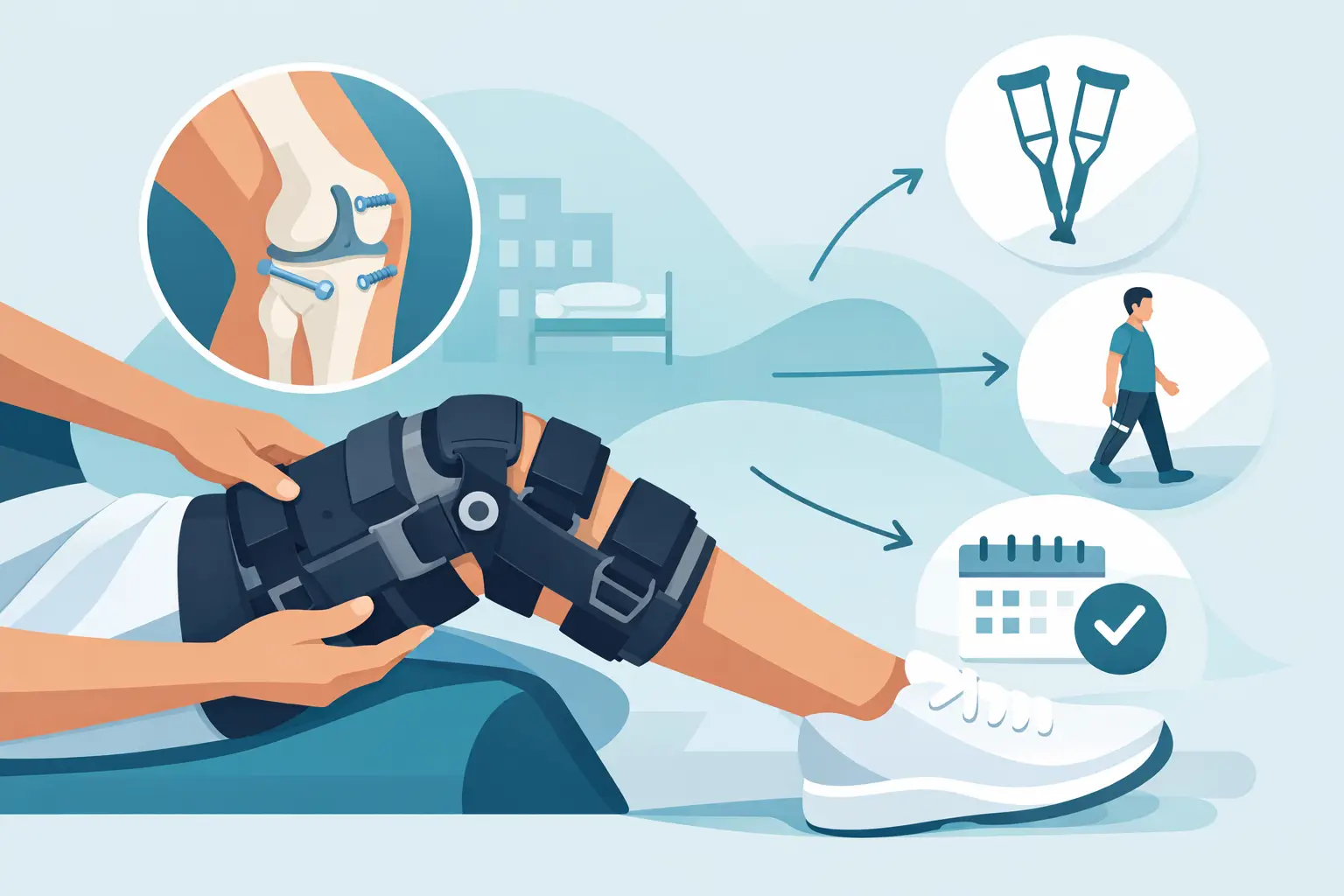
After an ACL reconstruction, meniscus repair or knee replacement, every step is part of the healing process. A knee brace after surgery can protect the joint during this phase, guide movement and limit the range of motion as prescribed. However, it is no substitute for medical check-ups or physiotherapy. The key factors are always which structure was operated on, how stable the knee is and which post-operative protocol applies.
Knee brace after surgery: protection with a clear purpose
A brace is not a standard product for every operated knee. It is used when the knee joint needs to be temporarily immobilized, protected against certain movements or mobilized in a controlled way. For example, after ligament surgery, it can protect against excessive bending or straightening. After a meniscus repair, it can limit weight-bearing during the first few weeks. A brace is not required in every case after total knee replacement.
The doctor’s prescription specifies whether a brace is needed, which type is required and which ranges of motion are permitted. These instructions should not be changed without medical advice. With hinged knee braces in particular, limiting mobility is an essential part of the treatment.
A well-fitting brace can also help you feel more secure when standing up, walking and climbing stairs. However, it should not encourage you to increase your activity sooner than your recovery allows. Pain, swelling and your doctor’s weight-bearing instructions remain the main points of reference.
Which brace is right for your surgery?
The choice depends on the surgical site and the treatment goal. Body shape, thigh and lower-leg circumference, skin sensitivity and your ability to put the brace on yourself also play a role.
Immobilization brace for the early protection phase
An immobilization brace usually holds the knee in a set position, often in extension. It may be used when movement should initially be kept to a minimum, for example after certain ligament injuries, tendon reconstructions or complex procedures. Side bars stabilize the joint, while wide straps secure the brace to the leg.
The advantage is that movement is clearly restricted. The downside is that wearing it for too long can weaken the muscles and impair mobility. That is why the duration of use is reviewed regularly by a doctor. Whether the brace needs to be worn at night is not a general rule but a specific instruction from your care team.
Hinged brace with adjustable range of motion
A hinged brace allows flexion and extension to be limited using side hinges. It is often used after ACL surgery, meniscus repair or other procedures where mobility is to be gradually increased. For example, the settings can prevent the knee from bending too far while still allowing controlled walking.
This type of brace requires particularly careful fitting. The brace hinge must be aligned with the natural axis of the knee joint. If the brace slips down while walking or twists out of position, it will not guide the knee reliably and may cause pressure sores.
Stabilization for kneecap and soft-tissue problems
After kneecap surgery or for patellofemoral problems, braces with patellar guidance may be suitable. They are designed to support the kneecap as it moves without completely immobilizing the knee. Whether a softer knee support is sufficient or a more stable brace is needed depends on the surgery and your doctor’s assessment.
A simple knee support should not be used on your own as a substitute for a prescribed knee orthosis. Supports provide compression and light guidance, but restrict movement much less than a hinged orthosis.
Check the fit and settings
The best knee orthosis after surgery will only help if it is fitted correctly. Put on the orthosis while sitting or lying down, if possible, with the leg unloaded. The knee should be positioned as instructed by your treatment team. Fasten the straps from the bottom up and tighten them securely, but not so much that they constrict.
Then check that the side rails are straight and that the orthosis joint is centred at the level of your knee joint. When standing up for the first time, it is advisable to use the prescribed forearm crutches. Walk a few steps and check the fit again. Straps often only loosen once you start moving, or the orthosis may slide down your leg.
A slight mark on the skin after removing the orthosis can be normal. Numbness, tingling, cold or bluish toes, and severe pressure pain, however, are warning signs. If these occur, remove the orthosis and check the fit. If symptoms persist, it needs to be professionally adjusted.
Swelling often causes the circumference of the leg to change over the course of the day. If necessary, the straps may need to be carefully readjusted. Tightening them too much does not improve stability; it can impair circulation and put strain on the skin.
Using your orthosis safely in everyday life
In the first few weeks, everyday trips are often the biggest challenge: going to the toilet, the kitchen or physiotherapy, or stepping up or down a single step. Remove tripping hazards such as loose rugs, cables and low stools. Wear sturdy, closed shoes with non-slip soles. It is often safer to put on socks or shoes while sitting down.
Whether you can put weight on your leg is determined by your aftercare plan, not by the orthosis. Some patients can bear full weight early on, while others may only partially bear weight or must not put any weight on the leg. Follow the prescribed weight-bearing limits and instructions for using forearm crutches. If you are unsure, practise walking, turning and climbing stairs during physiotherapy or with a healthcare professional.
The orthosis is usually removed for showering unless you have been instructed otherwise. A shower stool, grab bars and a non-slip mat can make personal care much safer. After washing, your skin should be completely dry before you put the orthosis back on. Moisture under the pads can lead to friction and skin irritation.
The orthosis itself should be inspected regularly. Check the straps, hook-and-loop fasteners, hinges and pads for wear or dirt. Removable fabric pads should only be cleaned according to the manufacturer’s instructions. Bent rails, faulty fasteners or a loose joint setting must be checked by a professional.
When to seek medical advice
Increased swelling immediately after being more active can occur. It should be managed using the agreed measures, such as elevating the leg, applying cold or adjusting your activity level. If symptoms come on suddenly or become much more severe, simply readjusting the orthosis is not enough.
Contact your treating practice or clinic promptly if you notice any of the following:
- increasing redness, warmth or oozing around the surgical site
- fever, chills or a significant deterioration in your general condition
- severe calf pain, swelling in one leg or shortness of breath
- a new feeling of instability, locking of the knee or a fall
- persistent pressure sores, open skin or altered sensation in the leg
Shortness of breath or sudden chest pain is a medical emergency and must be assessed immediately.
Organising your prescription, fitting and orthotic care
Many knee orthoses are medical aids that can be prescribed by a doctor when medically necessary. Whether and to what extent a health insurance provider covers the costs depends on the prescription, contracted providers and the specific care pathway. Before making a purchase, check whether a particular orthosis, individual fitting or provision through a medical supply store is planned.
For caregivers, it is helpful to keep the doctor’s instructions clearly visible: permitted weight-bearing, the set range of motion, wearing times, and appointments for check-ups or physiotherapy. This helps prevent misunderstandings, especially when several family members or professional caregivers are providing support. A knee orthosis is intended to support your return to movement—with a proper fit, realistic increases in activity and careful attention to your recovery.

