


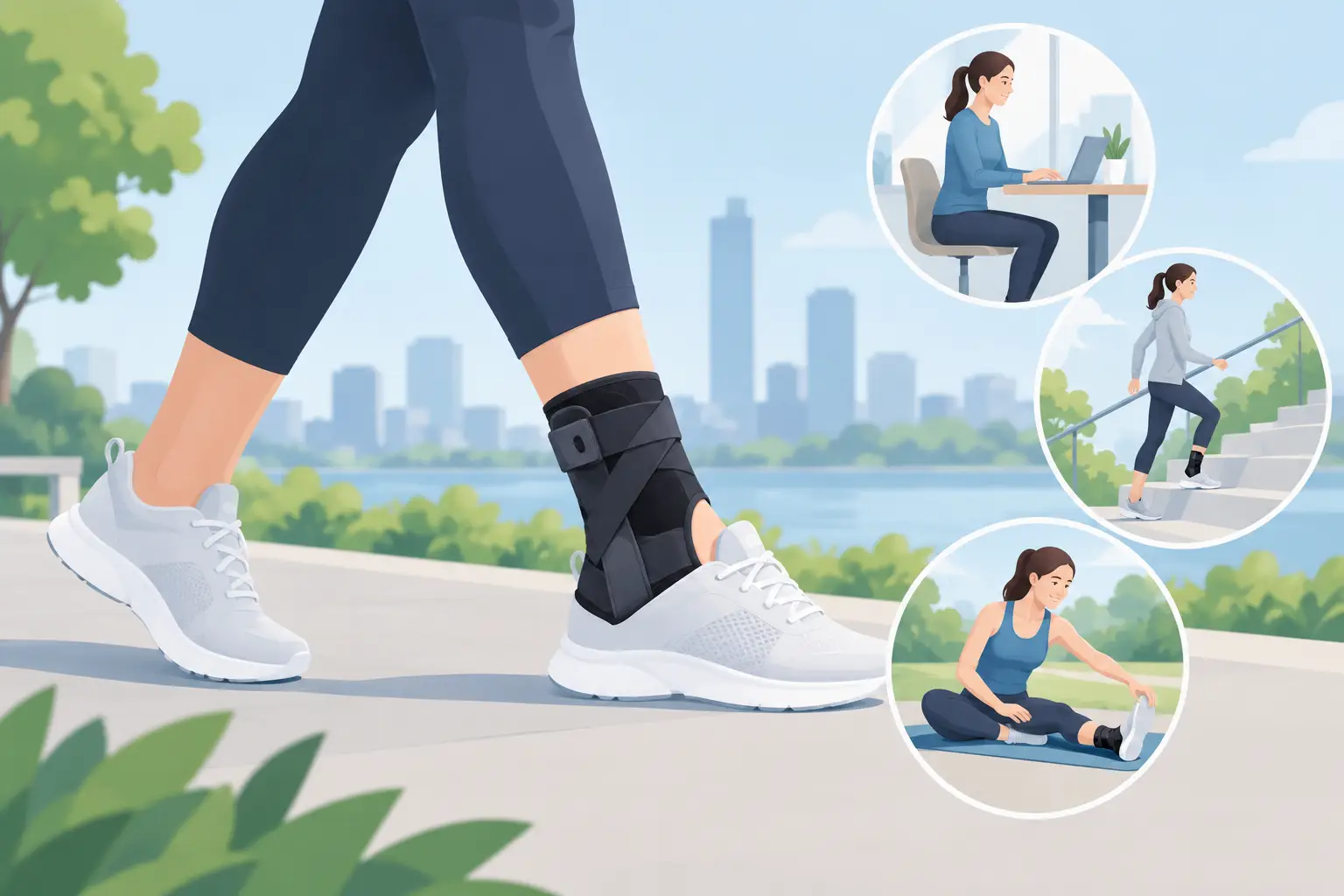
After a sprain, ligament tear, surgery, or in cases of ongoing instability, an ankle brace should above all help you move safely in everyday life without putting unnecessary strain on the joint. However, it is no substitute for a medical diagnosis or an individual treatment plan. Whether you are getting up, on your way to work, or walking around the house, the brace’s effectiveness depends largely on whether it is fitted correctly, worn with suitable shoes, and checked regularly for skin reactions.
What does an ankle brace do?
The ankle joint connects the lower leg and foot. Rolling the ankle outward most often strains the outer ligaments. An ankle brace can limit these movements, guide the joint, and improve your sense of security when walking. Depending on the design, it provides lateral stability, controls certain directions of movement, or also offers compression.
The right type of brace depends on the diagnosis, the healing process, and the demands of everyday life. A light support may be sufficient for minor irritation or after an injury has healed. A more supportive brace is often used in cases of significant instability, immediately after an injury, or following surgery. Rigid or semi-rigid shells offer greater protection but require enough room in the shoe and may restrict movement more.
The goal is not to stabilize the joint as tightly as possible for as long as possible. A brace should protect the joint during the appropriate phase and support a gradual, controlled increase in activity. Your treating practice, physiotherapist, or clinic will advise you when to wear it, reduce use, or stop wearing it.
How to fit an ankle brace correctly for everyday use
A good fit starts with the right size. Follow the manufacturer’s sizing guidance, which is usually based on shoe size and measurements of the ankle and foot circumference or length. A brace that is too large may slip and will not provide proper support. A brace that is too small can cause pressure, impair circulation, and irritate the skin.
Whenever possible, put the brace on clean, dry skin. Many models are worn over a thin, wrinkle-free sock. This reduces friction and makes it easier to maintain hygiene. Models with pads, shells, hook-and-loop straps, or laces must be positioned so that the heel and ankle sit in the intended places. Only then should you fasten the straps and closures.
The brace should fit snugly but must not constrict. Your toes should stay warm and retain their normal color. Tingling, numbness, increasing pressure pain, or significant swelling of the foot are not normal signs of getting used to the brace. Loosen the brace and check the fit. If the discomfort persists, seek professional advice.
A quick fit check before you head out
Before your first walk around the house, check four things: the heel is fully seated in the heel guide, the side supports rest against the ankle, the straps are flat and not twisted, and the brace does not slip upward or sideways when you step. After a few steps, it should feel supportive without rubbing or pressing painfully.
Swelling can change throughout the day. If this happens, it is a good idea to check the fit again. Following your doctor’s instructions, elevating the foot may help reduce swelling. A more swollen area or one that suddenly becomes painful should not be treated simply by tightening the brace further.
Shoes and clothing: safety starts at the foot
An orthosis is only as effective as the combination of the orthosis and the shoe. Open, soft slippers, worn-out sneakers or shoes without heel support often do not provide enough stability. Closed shoes with a firm heel counter, non-slip sole and sufficient room are a better choice. Removable insoles can provide extra space if needed.
Take the orthosis with you when buying shoes. Especially with shell orthoses, you may need a much wider shoe than you are used to. The shoe must not feel tight over the orthosis, as pressure sores often develop where edges and seams rub against each other. Lace-up shoes or styles with wide-opening hook-and-loop fasteners make them easier to put on and take off.
There is also a risk of falling at home, particularly on smooth floors, at rug edges or in the bathroom. Firm, closed slippers are usually the safer choice. If you are temporarily allowed to put only limited weight on your foot, use prescribed walking aids such as forearm crutches correctly. Wearing an orthosis does not automatically mean you can put your full weight on your foot.
Stay active, but pace yourself
Many people avoid putting any weight on their foot because they are afraid of twisting it again. Resting the foot may be appropriate during the acute phase. In the longer term, however, the ankle needs controlled movement again — depending on the diagnosis and medical clearance — to prevent further loss of muscle strength, coordination and normal walking ability.
In everyday life, this means planning your routes, starting slowly and increasing activity gradually. Uneven paths, wet leaves, stairs, narrow passageways and carrying heavy shopping quickly all require extra care. Use handrails and avoid sudden twisting movements on the foot bearing your weight.
Exercises prescribed by your physiotherapist should not be replaced by testing your limits on your own. Whether ankle circles, mobilization, balance exercises or strengthening are appropriate depends on when the injury occurred and how stable the ankle is. A recent ligament injury calls for different precautions than chronic instability or osteoarthritis of the ankle.
Skin care, hygiene and orthosis maintenance
Check your skin every day, especially around the ankle bones, heel, Achilles tendon and top of the foot. Mild redness that fades quickly can be normal after pressure. Redness that persists, blisters, open sores or increasing pain, on the other hand, may indicate that the level of pressure is unsuitable. People with diabetes, circulation problems, loss of sensation or very sensitive skin should check particularly carefully and seek medical advice promptly if they notice anything unusual.
Care instructions depend on the material and the manufacturer’s guidance. Textile parts on many models can be cleaned carefully, while shells and fasteners can usually be wiped with a damp cloth. Orthoses that are fully dry are more hygienic and comfortable to wear. Direct heat, such as from a radiator, can damage hook-and-loop fasteners, padding and plastic parts.
Regularly check straps, seams, hook-and-loop surfaces and shells for wear. If a hook-and-loop fastener no longer holds or a shell is damaged, the orthosis may no longer provide secure support. Repairs using unsuitable materials often affect the fit and should be avoided.
When to seek medical advice
An orthosis can help manage symptoms, but it cannot prevent a serious deterioration. Seek medical attention promptly if your pain increases significantly, your foot or toes become cold, pale or blue, you develop severe numbness or you suddenly cannot bear weight. The same applies if redness, warmth, fever, an open pressure sore or unusual swelling gets worse.
You should also have your orthosis checked after twisting your ankle again, even if you were wearing it. The injury may have become worse or your support needs may have changed. Individual instructions are especially important for children, people with known vascular or nerve conditions, and those recovering from surgery.
The right support makes everyday life easier
An ankle orthosis should not only fit well when you are sitting. It needs to work reliably when you walk, get dressed, climb stairs and wear shoes. It can help for family members and caregivers to practise putting it on together at first and watch for changes in the skin or walking pattern.
If the orthosis digs in, slips or does not fit in the shoe you need, you do not have to put up with it. A professional fit and support assessment often provides more security than simply tightening a strap further. The right support protects your ankle — and helps you gradually return to a reliable daily routine.

