Posted on

Guide to Accessible Bathrooms at Home

Guide to accessible bathrooms at home

A wet bathroom floor, a high shower tray, or getting up from a low toilet can quickly become a fall risk in everyday life. This guide to accessible bathrooms explains which measures can promote safety and independence—whether a person has a long-term mobility impairment, is recovering from surgery, or receives help from family members with care at home.

A bathroom does not necessarily need to be completely renovated to make it accessible. The key is to consider the specific movements the person needs to make: How safely can they walk? Do they use a rollator, wheelchair, or walking aid? Do they need help washing, showering, or with intimate hygiene? The answers will help determine which structural adaptations and aids are appropriate.

Accessible bathrooms: safety starts with planning

Bathrooms combine limited space, smooth surfaces, and frequent changes of position. Anyone moving from a rollator to the toilet, sitting down in the shower, or leaning on the washbasin needs enough room to move and dependable grab points. Good planning not only reduces the risk of accidents but also makes transfers easier for family caregivers and care staff.

For a comprehensive renovation, the requirements of DIN 18040 can provide valuable guidance. Among other things, it distinguishes between areas that are accessible and those that can be used without restriction by wheelchair users. However, not every measurement can be achieved in an existing home. In that case, prioritize the main problem areas: access to the bathroom, the space in front of the toilet and washbasin, and the shower entrance.

Before starting work, it is advisable to assess the existing space carefully. Door width and swing, radiators, windows, pipes, and electrical outlets can significantly affect the options available. The user’s height, strength, balance, and ability to grip are also important. A grab bar, for example, is only helpful if it is installed at the right angle and reachable height, and on a wall that can support it.

The shower: level access, slip-resistant, and easy to reach

A level-access shower makes getting in easier because there is no threshold to step over. It is particularly beneficial for people with limited leg mobility, those recovering from hip or knee surgery, and people who use a shower wheelchair. The floor must slope sufficiently toward the drain to prevent water from spreading across the room. Slip-resistant flooring is just as important, as a modern-looking tile is not automatically suitable for a wet area.

For people who cannot stand safely, a shower stool or shower chair provides a stable place to sit. Models with a backrest and armrests offer additional support. A fold-down shower seat saves space in small bathrooms, but must be properly secured to a load-bearing wall. For people with greater support needs, a mobile shower and commode wheelchair can eliminate transfers and make personal care much easier.

The faucet should be reachable while seated. Thermostatic faucets help prevent scalding from water that is too hot. A hand shower with a long hose allows targeted washing while seated. Shower rails should not be used as grab bars without checking: they can only support weight if they are specifically designed for that purpose and installed accordingly.

Adapt the toilet and washbasin to the user’s mobility

Low toilets make it harder to stand up and place considerable strain on the hips, knees, and hands. A raised toilet seat can be a suitable short-term or long-term solution. It is available in various heights, sometimes with a lid or armrests. The right option depends on the seat height, the user’s mobility, and whether they need to transfer sideways.

Fold-up support rails beside the toilet provide support when sitting down and standing up. They are especially useful when a person has different levels of strength on each side or transfers from a wheelchair. Permanently mounted grab bars can be an alternative, but they also require suitable fixings. Suction grab bars are not designed to bear weight and should only be used as an additional aid, with their grip checked before every use.

A wheelchair-accessible washbasin provides legroom for wheelchair users and allows them to wash while seated. The mirror should extend down to a lower height or be tiltable. Single-lever taps are generally easier to operate than twist handles. For people with limited hand function, extended levers, touchless taps or easy-to-grip controls can make a real difference in everyday use.

Guide to accessible bathrooms: understanding measurements

Measurements are not a mere formality; they determine whether a bathroom can be used safely. There needs to be enough clear space in front of the toilet, washbasin and shower to turn a walker or position a wheelchair. A turning space of 150 x 150 centimetres is often used as a guideline for wheelchair accessibility. Even in smaller existing bathrooms, a well-thought-out layout can make a noticeable difference, for example by installing an outward-opening door or a sliding door.

The door also deserves attention. It should be wide enough to allow walking aids, shower wheelchairs or a wheelchair to pass through. Outward-opening doors prevent a person who has fallen from blocking the door from inside the bathroom. Where this is not structurally possible, a suitable emergency release mechanism may help. Thresholds at the entrance should be avoided or made as low and high-contrast as possible.

Contrasting colours help people with impaired vision find their way around. Clearly contrasting grab bars, an easy-to-see toilet seat and sufficient glare-free lighting are often more effective than purely decorative design. Motion sensors or easily accessible light switches eliminate the need to walk around in the dark. Lighting should also minimise reflections on wet surfaces.

Aids for renovation periods and everyday needs

Not every care need has to wait until a bathroom renovation is complete. There are aids for many situations that can be used without major structural changes. However, they are no substitute for a safe bathroom layout when there is a high risk of falling or extensive assistance is needed.

A bath board or bath seat makes it easier to get into the bath and wash if the bathtub is to remain in place for now. However, transferring over the edge of the bath may already be unsafe for people with severely limited mobility. In that case, a different shower solution is generally more suitable in the long term. Non-slip mats can provide extra support, but they must lie flat, be easy to clean and not create a tripping hazard themselves.

For washing at the basin or in the shower, long-handled bathing aids, easy-to-use soap dispensers and ample storage space are useful. Caregivers benefit from a working environment that reduces the need for close lifting. A shower wheelchair, a suitable transfer aid or a height-adjustable care stool can provide lasting relief for the back and shoulders.

Continence care should also be organised discreetly and hygienically as part of bathroom planning. Incontinence products, skin protection and cleansing supplies should be stored within easy reach without restricting movement areas. A waste bin with an easy-to-use lid and an accessible towel rail help maintain a hygienic routine.

Funding and professional advice

Where there is a medical need, certain aids may be eligible for prescription. Whether statutory health or long-term care insurance covers the costs depends on the specific aid, the care level, the prescription and the individual care situation. Under certain conditions, structural adaptations may be subsidised by long-term care insurance as measures to improve the home environment.

It is therefore worth consulting a medical practice, therapist, care advisor or qualified specialist company before buying or renovating. Grab bars, shower seats and transfer aids in particular must be suitable in terms of weight capacity, installation and seating position. With its wide range of bathroom and care aids, Servomed can help put together a selection suited to individual needs.

A well-planned bathroom does more than make life more comfortable. It gives people the opportunity to continue carrying out familiar routines independently for longer—and makes care safer where it happens every day: at home.
Posted on

Choosing Transfer Aids Safely in Nursing Homes

Selecting transfer aids safely in nursing homes

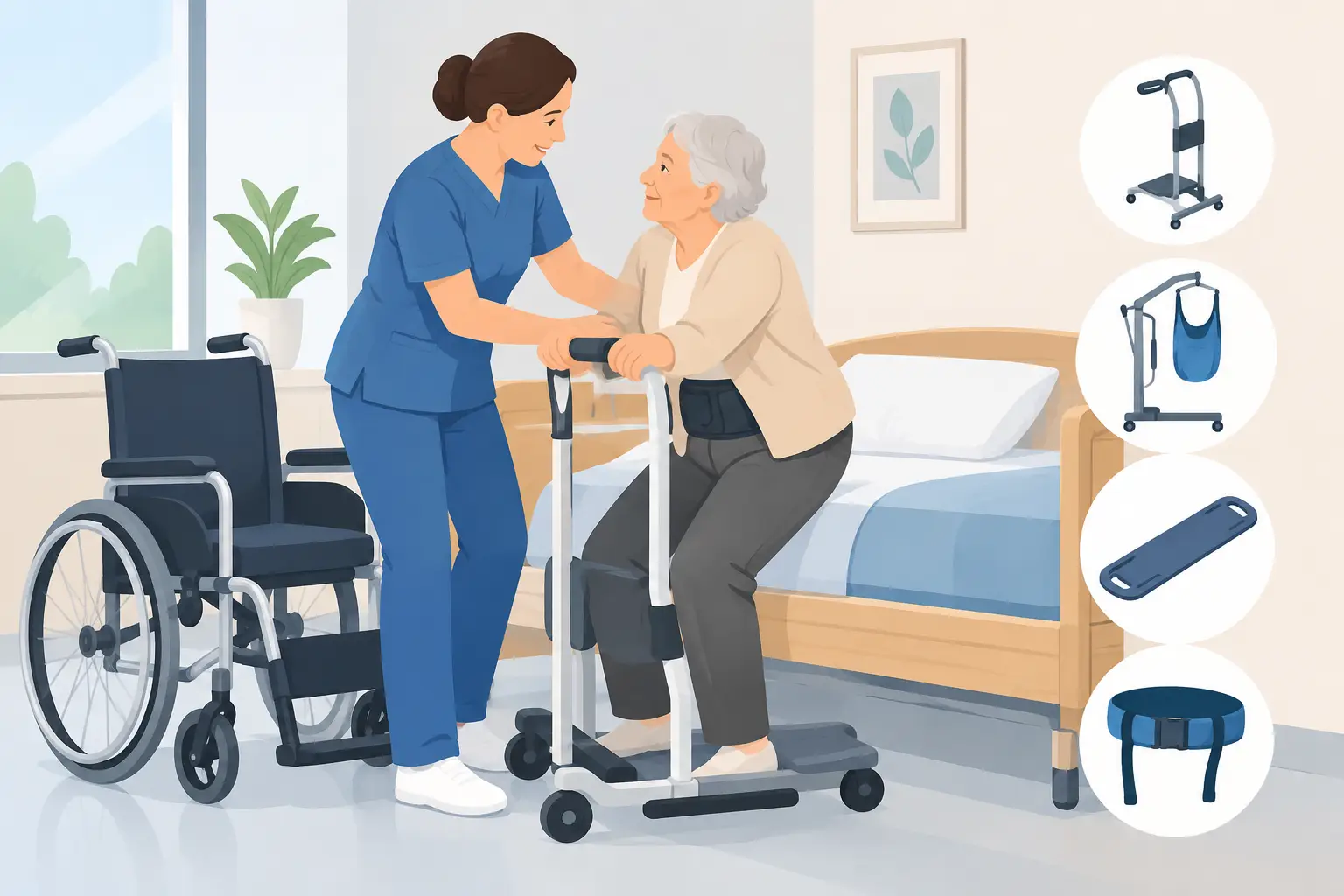
A transfer from a bed to a wheelchair, toilet or shower chair often determines whether a resident feels safe and respected during care. Transfer aids for nursing homes not only reduce physical strain on care staff. When selected appropriately, they support mobility, prevent falls and enable transfers tailored to each person’s actual support needs.

The key question is therefore not: Which transfer aid is best in general? What matters is which solution is suited to a person’s mobility, weight, trunk stability, cognitive status, day-to-day condition and surroundings. A facility usually needs several coordinated aids rather than a single device for every situation.

Why Transfer Aids Are Essential Equipment in Nursing Homes

Transfers are among the most physically demanding tasks in care. Moving a person, helping them to stand or transferring them between a bed, wheelchair and bathroom can place considerable strain on the back, shoulders and hands. Improvised lifting techniques or transfers without suitable support put both residents and staff at risk.

For residents, there is more at stake than simply moving from one place to another. A safe transfer can help preserve existing abilities: residents who can sit up at the edge of the bed with guidance, stand briefly or actively participate in a transfer experience a sense of independence and control. Conversely, an unsuitable aid can cause anxiety, worsen pain or lead to unnecessarily passive care.

Suitable aids also make a difference to day-to-day operations. Clear procedures, readily available equipment and trained staff prevent delays and last-minute workarounds. This is especially important for recurring transfers during morning care, trips to the toilet, after therapeutic interventions and for residents with high support needs.

Assess Support Needs Before Choosing a Product

Before purchasing equipment, every facility should systematically assess transfer needs. A diagnosis alone is not enough. Two people with similar conditions may have very different abilities and risks when transferring.

Key factors to assess include the ability to sit and stand, leg strength, trunk and head control, grip strength, as well as pain and contractures. Body weight and dimensions, skin condition, pressure ulcer risk, any catheters or drains, and the ability to understand and follow instructions must also be considered. If a person’s capacity fluctuates, for example after an infection or as a neurological condition progresses, their care needs must be reassessed regularly.

The transfer situation is equally important. Transfers between a bed and wheelchair have different requirements from those between a wheelchair and toilet. Small bathrooms, door thresholds, carpet edges, low beds or furniture that does not allow a device to fit underneath can limit the choice of an otherwise suitable aid. Safe working load, turning radius and clearance underneath furniture are therefore practical purchasing criteria, not minor details.

Transfer Aids Used in Nursing Homes

Transfer aids can be grouped according to the level of active participation they require. This classification helps ensure that an aid is viewed not as a substitute for care expertise, but as targeted support for a particular procedure.

Aids for Residents Who Are Mostly Independent

Transfer boards and turntables may be suitable when residents can sit safely, control their upper body and participate at least to some extent. A transfer board bridges small gaps between two seating surfaces. However, it requires good positioning and adequate protection against shear forces and skin damage, as uncontrolled sliding can put strain on the skin.

Turntables support transfers while standing, for example from a bed to a chair. They are only suitable if the person has sufficient standing ability and can partially bear weight. In cases of significant balance problems, inability to bear weight or unpredictable movements, they increase the risk of falls and are therefore not a safe alternative to a patient lift.

Standing aids for partially active transfers

Standing aids, often called stand-up lifts or standing lifts, support people who can hold on to handles and bear some of their weight through their legs. They are often suitable for short transfers and can encourage active participation. The leg supports, foot position and appropriate sling are crucial to prevent pressure on the knees, underarms or sensitive areas of skin.

A standing lift is not suitable for people who cannot participate safely, lack sufficient trunk stability or may suddenly buckle. In these cases, a passive patient lift is the safer choice. The team must clearly define this distinction so that the device is not used incorrectly under time pressure.

Patient lifts for full support

Mobile or ceiling-mounted patient lifts enable transfers for people with severely limited mobility. They significantly reduce the physical strain on caregivers and provide residents with controlled movement, provided the sling, seating position and lift are correctly matched. Ceiling track systems can offer advantages for frequent transfers or small, hard-to-access rooms, while mobile lifts can be used flexibly in multiple locations.

The sling is a safety-critical part of the system, not merely an accessory. It must be suitable for the person, the lift model and the intended use. Different designs may be required for transfers involving longer periods of sitting, toileting or residents with limited head control. Always follow the manufacturer’s approval and observe the permitted combinations of lift and sling.

Selection criteria for procurement and everyday care

Practical equipment is chosen to meet specific requirements, not by acquiring as many individual products as possible. When making a selection, facilities should formally check at least the following points:

  • Safe working load and size range: The device’s maximum permitted weight, as well as the appropriate size and load capacity of the sling, must be documented.
  • Transfer destination: Beds, care chairs, wheelchairs, toilets and shower chairs place different demands on the chassis, leg spread and positioning.
  • Activity level: Transfer boards, turntables, standing lifts and passive lifts are not interchangeable. The person’s remaining mobility determines the appropriate category.
  • Hygiene and reprocessing: Surfaces, padding and textiles must be suitable for cleaning and reprocessing in accordance with the facility’s hygiene standards.
  • Operation and maintenance: Battery life, charging procedures, emergency lowering, spare parts and inspection intervals must be manageable within daily work routines.

For mobile lifts, you should also check whether the base can slide under the bed, armchair or shower chair. A lift with a high weight capacity is of little use if its legs do not fit under the existing furniture. The height of the lifting arm and the clearance of doorways should also be considered before purchase.

Safety depends on how equipment is used, not just on the technology

Even high-quality assistive equipment does not automatically prevent misuse. Every transfer aid requires clear instruction, defined responsibilities and regular practical refresher training. New employees, temporary staff and trainees must know which aids are approved for which residents and when a second care worker is required.

Before every transfer, check the brakes, battery, condition of the sling and the safe position of the bed, wheelchair or chair. When transferring a resident, explain what is happening and involve them actively wherever possible. This helps them feel oriented and makes it possible to identify pain, dizziness or uncertainty in good time.

Take particular care if the resident has recently developed pain, circulatory problems or acute confusion, has recently undergone surgery, or has experienced a change in their ability to bear weight. A procedure that was previously well established may no longer be appropriate for a time. The assessment of nursing professionals and, where necessary, consultation with a therapist or physician take priority over familiar routines.

Integrating transfer aids into a consistent care plan

For nursing homes, it makes sense to integrate transfer aids into repositioning, mobilisation and pressure ulcer prevention plans. Residents who are transferred safely can change position more often, take part in communal activities and make use of their existing mobility. At the same time, peak workloads for staff can be planned more effectively.

Clearly labelling equipment, providing suitable storage locations and keeping enough slings available all help avoid time spent searching. Facilities with several residential units can benefit from planning their inventory according to resident profiles and typical transfer routes. Allowance should also be made for spare capacity during repairs and laundry cycles, as well as for short-term increases in support needs.

Good transfer aids do not make care less personal. On the contrary, they provide the physical safety and peace of mind needed to give a resident attentive support when getting up, transferring or settling in.

Posted on

Best Aids for Stroke Patients

Best aids for stroke patients

After a stroke, everyday life is often determined not only by therapy but by a practical question: What can be done safely at home, from getting up to personal care? The best aids for stroke patients are therefore not based on a general product list. They need to be suited to paralysis, balance problems, impaired hand function, perceptual disorders, and the individual home environment.

An aid should do more than compensate for a limitation. It should help prevent falls, make care easier, preserve existing abilities, and enable participation in everyday life. The choice should therefore be made by a coordinated team comprising the treating practice, physiotherapists and occupational therapists, care staff, and family members. For many products, it is also necessary to clarify whether there is a prescription from a doctor and which costs the health insurance fund will cover.

Choose the best aids for stroke patients based on their needs

Needs often change over the course of rehabilitation. Immediately after the acute phase, transfers, positioning, and safe basic care are the main priorities. As the person becomes more resilient, aids for mobility, dressing, eating, or returning to household activities may become more important. Equipment that was suitable in the first few weeks may later provide too little support or unnecessarily restrict independence.

The key factors are which side is affected and which functions are safely available. With hemiparesis, the unaffected hand can take on many tasks, but suitable one-handed solutions are often needed. In cases of neglect, a restricted field of vision, or attention problems, a technically sound product alone is not enough. High-contrast markings, designated places for items, and a calm, uncluttered environment are also part of safe care.

Make mobility and transfers safer

A suitable rollator can provide stability when walking if the person has a basic level of balance and walking ability. It must fit the user’s height, have reliable brakes, and be sufficiently maneuverable in the home. A wheelchair may be necessary for longer distances or if stamina is significantly reduced. Seat width, footrests, armrests, brakes, and the possibility of one-handed operation should be assessed by a professional. A wheelchair that is too wide may not fit through the hallway, while one that is too narrow can compromise seating comfort and skin protection.

For transfers from bed to wheelchair, onto the toilet, or into an armchair, standing aids, grab bars, transfer boards, or, when a high level of support is needed, patient lifts can be useful. These products reduce not only the risk of falls for the person affected. They also protect family caregivers and healthcare professionals from strain. However, using a transfer board requires sufficient trunk stability and cooperation, as well as training in the technique. If the person cannot stand or maintain a seated position, a patient lift is usually the safer option.

In the bedroom, care beds with height-adjustable lying surfaces and adjustable back or leg sections can help. They make it easier to change position, transfer, and provide care. Bed trapezes, bed rails, or suitable bed guards should only be used if they are appropriate for the individual and do not pose a risk of entrapment or falling out.

Bathroom and toilet: small adjustments with a big impact

Wet surfaces, limited room to move and slippery floors make the bathroom a particularly hazardous area after a stroke. A shower stool or shower chair allows people to wash while seated. Grab bars, non-slip mats and a sufficiently high shower threshold can improve safety, but must be installed or used correctly.

A raised toilet seat can make standing up much easier, especially for people with reduced leg and trunk strength. Models with armrests offer additional stability. For people requiring extensive care, a commode chair may be useful if they cannot safely make their way to the bathroom. The practical question is not just which product is suitable, but also whether there is enough room to use it and for caregivers to assist.

Aids for care, skin protection and positioning

Prolonged sitting or lying down, limited independent movement and sensory impairments increase the risk of pressure injuries. Pressure relief aids are therefore an essential part of care for people who are immobile or have severely limited mobility. Pressure-relief cushions distribute pressure in a wheelchair or armchair. Special alternating-pressure or foam mattresses can relieve pressure in bed, but do not replace regular skin checks or necessary changes of position.

Product selection depends on mobility, weight, skin condition and existing pressure injury risk. A mattress designed to provide a high level of pressure relief may not function properly if it is set incorrectly or used on an unsuitable base. An assessment by a healthcare professional and consistent documentation of any areas of concern on the skin are therefore essential.

For people with incontinence or limited access to a toilet, absorbent incontinence products, bed protection pads and gentle cleansing products support daily care. The key factors are the right absorbency, a good fit and regular changes. Moisture and friction place additional stress on the skin. Skin protection products can be helpful, but must not replace monitoring for redness, pressure marks or signs of inflammation.

The positioning of the paralysed side also deserves attention. Positioning cushions and aids can support the arm, shoulder and leg. They should not put strain on the sensitive shoulder and should help maintain a natural posture. A therapist or care professional should advise on suitable positioning, particularly if the person has pain, spasticity or a partially dislocated shoulder.

Making eating, dressing and communication easier

Occupational therapy aids help people make targeted use of their abilities. Non-slip mats, plates with raised edges, adapted cutlery or lidded cups can make it easier to eat independently with one hand. Swallowing difficulties, however, require a different approach: priority should be given to a speech and language therapy assessment, the right food texture and, if needed, drinking aids. An unsuitable drinking aid can increase the risk of choking.

Button hooks, reachers, sock aids and long shoehorns can be useful for getting dressed. They are particularly helpful when hand function is limited but the person can reliably follow instructions. If spasticity or pain is severe, it is advisable to practise dressing and undressing with a therapist first, rather than using force to overcome resistance.

Communication aids are useful when aphasia or dysarthria makes it difficult to communicate. Simple picture cards, communication boards, notebooks or digital communication solutions can help people express their needs. In this case, fewer options are often better: a clearly organised board with frequently needed messages is more likely to be used in everyday life than an overloaded system.

Assessing the home as part of care

A mobility aid can only help if the way to use it is clear and safe. Loose rugs, door thresholds, poor lighting and narrow passageways are common obstacles. Before purchasing a rollator or wheelchair, measure door widths, bathroom access and turning spaces. It is worth taking a walk through the home together with a family member and a therapist or care professional.

Often, targeted adjustments are all that is needed: a sturdy chair with armrests, a raised seat, storage within easy reach, and a telephone or emergency call system close at hand. If the risk is higher, a personal emergency response system can provide additional security, especially if the person concerned lives alone at times. However, technical solutions are only helpful when ease of use, hearing and ability to respond are taken into account.

Keep prescriptions, trials and care provision in view

Many medical aids can be prescribed by a doctor when medically indicated. Whether the health insurance fund covers the full cost depends, among other things, on the product category, contracted providers, approval and the specific model. A prescription is no substitute for advice on suitability for everyday use. A trial and proper instruction are essential, especially for wheelchairs, care beds, pressure ulcer prevention systems and transfer aids.

Care facilities and outpatient services have additional requirements: durable materials, hygienic reprocessing, suitable replacement parts and clearly defined responsibilities. In the home, too, maintenance, battery condition for powered aids, brake function and safe adjustment should be checked regularly. Servomed brings together aids for mobility, care, hygiene and pressure ulcer prevention in clearly defined categories.

The right care provision may need to change over time. Regularly reviewing aids together with therapists and care professionals not only improves safety, but also preserves the independence that is so valuable in everyday life after a stroke.

Posted on

Using a transfer belt safely during transfers

Using a transfer belt safely for transfers

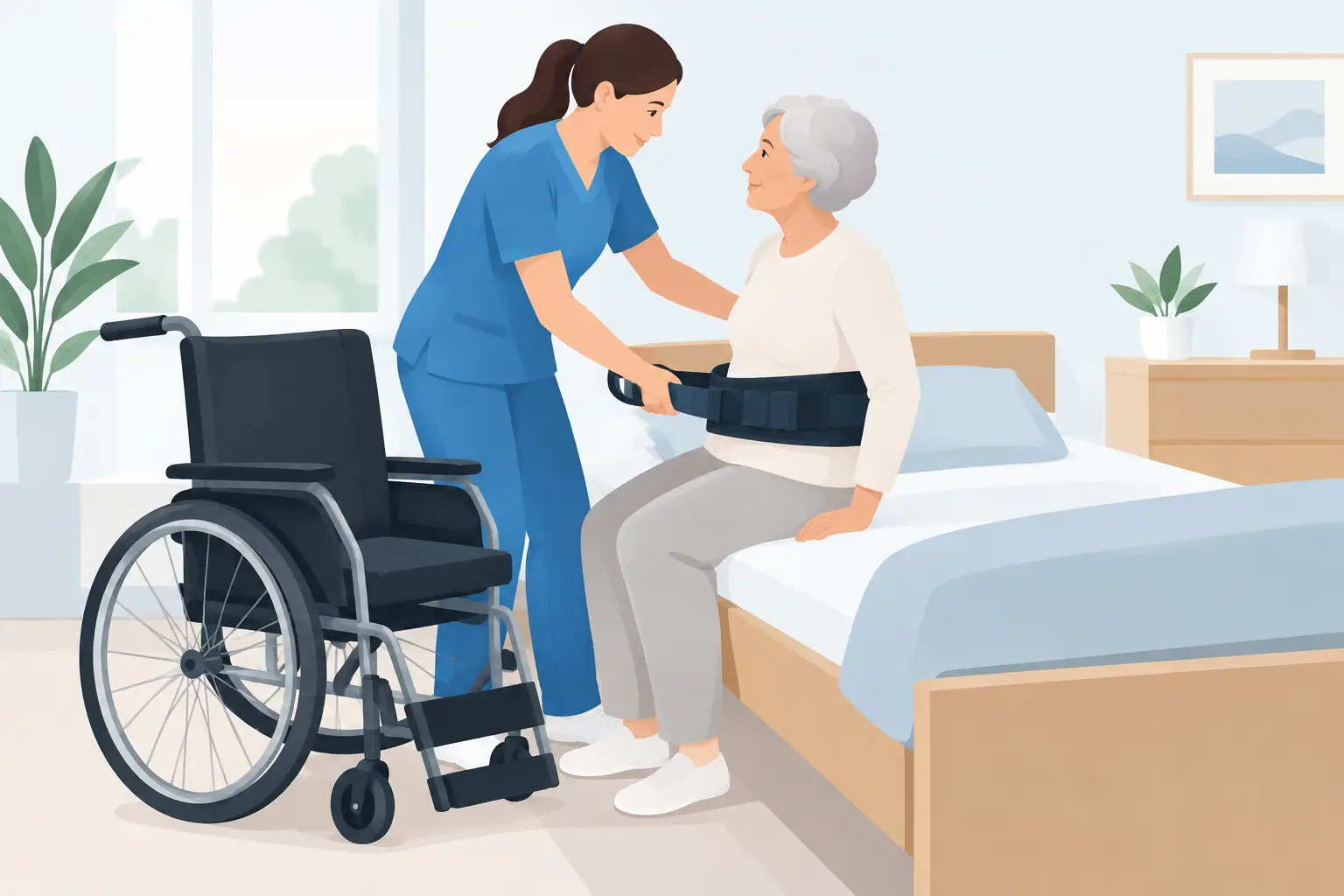
Moving someone from a bed to a wheelchair, toilet, or armchair can be physically demanding for both the person receiving care and the caregiver. Using a transfer belt during transfers does not mean lifting someone. When fitted correctly, the belt supports the person’s remaining mobility, provides stability, and allows them to be guided in a controlled way during the transfer. This helps protect the dignity of the person receiving care, as well as the back, shoulders, and hands of the caregiver.

What a transfer belt can and cannot do

A transfer belt, also known as a gait or safety belt, is placed around the person’s waist and fastened securely. It gives caregivers a defined grip close to the person’s body. Depending on the design, it has several vertical or horizontal handles that allow for different grip positions. This can provide greater safety, especially during short standing transfers—for example, when standing up from a chair, turning toward a wheelchair, or moving to the toilet.

The key point: A transfer belt is an aid for providing support and guidance, not a lifting belt. The person receiving care must be able to bear at least some weight, understand instructions or respond to agreed signals, and have sufficient control of their upper body. Anyone who cannot stand or actively participate should not be transferred using a transfer belt. Depending on the person’s mobility, weight, and care situation, alternatives may include sit-to-stand aids, transfer boards, turntables, or a patient lift.

An individual assessment is also necessary in cases of severe pain, recent surgery, unstable fractures, advanced osteoporosis, significant balance problems, or an acute deterioration in health. Medical, therapeutic, or professional care instructions always take precedence.

Before transferring: Assess the situation and check the equipment

A safe transfer starts not with reaching for the belt, but with preparation. The person receiving care should know what is going to happen next. A calm, clear explanation such as “We’ll stand up together, turn toward the wheelchair, and sit down slowly” helps them feel prepared. Also ask whether they feel any pain, dizziness, or unease. A person’s condition on the day, medication, and fatigue can all significantly affect how much they can manage.

Next, check the surroundings. Position the destination chair or wheelchair as close as possible and at a slight angle to the person’s stronger side. Make sure the wheelchair brakes are locked and swing or fold the footrests out of the way. Remove trip hazards such as loose rugs, cables, or open drawers. The seat should be stable and not too low. Non-slip, closed-toe shoes or non-slip socks can improve stability.

The belt itself also needs a quick safety check. Inspect the material, seams, handles, fastening, and buckle, if applicable, for damage. A frayed belt, a stiff fastener, or torn handles means the belt must not be used. Also follow the manufacturer’s instructions for sizing, maximum load, cleaning, and permitted use.

How to fit a transfer belt correctly

Place the belt over clothing around the waist—not over the chest or directly against bare, sensitive skin. It should be snug enough not to ride up, but must not restrict breathing or compress the abdomen. As a guide, you should be able to fit a flat hand between the belt and the body. Take extra care if the person has a prominent abdomen, a stoma, a PEG tube, wounds, or painful pressure areas. Depending on the situation, a different transfer aid may be more suitable.

Make sure the loops are easy to reach. Position the buckle so that it does not press on the person or get in the way when they sit down. A transfer belt must never be placed around the arms, legs, neck or chest. Nor should it be used to catch someone who is at risk of falling.

Using a transfer belt for transfers: the safe procedure

Stand close to the person you are assisting, but not directly in front of their feet. Place your feet hip-width apart, with one foot slightly in front of the other. Keep your back as straight as possible and shift your weight through your legs. Do not pull with your back or lift the person by the belt handles.

To help the person stand up, have them move as far forward as they can on the seat. Their feet should be flat and stable on the floor, ideally beneath their knees. If they have weakness on one side, they can place their stronger foot slightly farther forward. Ask them to push up using a stable armrest, a bed trapeze or a suitable standing aid—not your neck or shoulder.

Hold the transfer belt handles with both hands. Agree on a clear cue to start, for example: “Let’s stand up on three: one, two, three.” The person you are assisting shifts their weight forward and actively pushes themselves up. Guide the movement by holding the belt securely and shifting your weight backward or to the side, without jerking. If the person remains seated or their knees buckle, stop the attempt. Help them sit back down in a controlled manner and reassess the situation.

Once standing, turn in small steps rather than twisting the knees or back. Guide the person toward the target chair until the backs of their legs touch the seat. Only then should they slowly sit down. Support them using the belt until they are both seated securely. Then remove the belt, or leave it on if more short transfers are planned, provided it remains comfortable and the manufacturer’s instructions allow this.

When two people are helping

A second trained helper may be necessary if the person cannot stand securely, has a higher body weight, or the primary helper has limited strength. Before starting, both helpers should agree on who will give instructions, which side will be supported and when the movement will begin. Uncoordinated pulling increases the risk of the person losing their balance or experiencing pain.

However, having two people help does not automatically make an unsuitable transfer safe. If the person cannot bear enough weight, an appropriate technical aid should be used. This is especially important in professional care settings, where risk assessments, internal standards and back-friendly work procedures are mandatory.

Common mistakes when using a transfer belt

A belt that is too loose can ride up when the person stands and will not provide reliable support. A belt that is too tight can cause pressure, restrict breathing and trigger pain. Pulling the belt up under the arms is also problematic. This places strain on the shoulder joints, ribs and soft tissues, while reducing the person’s ability to move independently.

The surroundings are also often underestimated. An unlocked wheelchair, wet floors or footrests that have not been moved out of the way can make an otherwise well-prepared transfer dangerous. So take a few seconds to check everything before each transfer. Time pressure is no reason to cut corners on safety.

Another mistake is assuming that an aid replaces professional guidance. Family caregivers in particular can benefit from having nursing professionals, physiotherapists or occupational therapists demonstrate how to perform the transfer. They can adapt the grip technique, seat height, suitable aids and individual risk factors to the home environment and the abilities of the person being assisted.

Choosing a belt: size, handles and care requirements

Transfer belts are available in different sizes, widths and designs. Sufficient length and an adjustable, securely fastened closure are essential. Several sturdy loops make it easier to adjust the handle height and can be useful for people of different heights or with different movement patterns. Wider models distribute pressure more evenly, while narrower belts may be easier to handle for short, simple transfers.

Hygiene is another important consideration in day-to-day care. The belt should be washable or suitable for disinfection in accordance with the manufacturer’s instructions, and checked for soiling after each use. In care facilities, it is advisable to assign each belt to a specific resident or follow a clear hygiene protocol. Instructions for reprocessing shared aids must be followed especially carefully.

The right model depends on more than clothing size or body weight. Trunk stability, grip strength, skin condition, pain, the type of transfer and the number of helpers are all important factors. Professional advice can help you incorporate the transfer belt appropriately into an overall plan for mobility aids, fall prevention and back-friendly care.

A well-chosen transfer belt can make short position changes noticeably safer and more comfortable. However, careful cooperation remains essential: explain movements in advance, encourage the person to do as much as they can, respect their limits and switch to a more suitable transfer solution promptly if you are unsure.

Posted on

When does insurance really cover care aids?

When does the health insurer actually cover care aids?

A pair of disposable gloves, a bed protection pad, or a care bed can make everyday life at home much easier. But when does insurance cover care aids? The key factors are not just the diagnosis or age, but above all the officially recognized care grade, the home care situation, and the type of product needed. Knowing these requirements makes it easier to plan care and avoid unnecessary out-of-pocket costs.

When does insurance cover care aids?

As a rule, the responsible body is the long-term care insurance fund, which is part of the statutory health insurance provider. It covers care aids under Section 40 of Book XI of the German Social Code (SGB XI) if the person in need of care has an officially recognized care grade and receives care at home, in a shared living arrangement, or in a comparable home setting. The aids must be necessary to make care easier, alleviate symptoms, or enable the person to live as independently as possible.

In principle, eligibility begins at care grade 1. A doctor’s prescription is not mandatory for many care aids. However, it can help support the case for technical products or when care needs are unclear. The long-term care insurance fund assesses in each case whether the product is covered by long-term care insurance and whether the selected option is cost-effective.

Different rules apply to full-time residential care. Products that are part of the standard equipment and care provided by a nursing home are generally supplied by the facility. Residents usually do not have the same monthly allowance for consumable products as they do when receiving care at home.

Consumable products: up to €42 per month

The long-term care insurance fund reimburses up to €42 per month for consumable care aids. This allowance can be used for products that are regularly used up during daily care and help protect the person in need of care or their family caregivers. Any unused balance is generally not carried over to the following month.

Typical reimbursable consumable products include:

The specific products and reimbursable quantities must suit the day-to-day care routine. For example, someone who mainly provides help with personal hygiene will often need gloves, hand sanitizer, and bed protection pads. Protective aprons or medical face masks may be useful when a higher level of infection protection is needed. The monthly maximum is not a flat cash payment to spend freely, but reimbursement or direct billing for eligible care aids.

Not every hygiene product is covered. Care creams, laundry detergent, wet wipes, and general household cleaners are generally not reimbursable care aids. Incontinence products such as pads or protective underwear are usually supplied as medical aids through statutory health insurance when there is a medical indication. It is important to distinguish between these categories, as responsibility may lie with health insurance, long-term care insurance, or, in some cases, another benefits provider, depending on the product.

Technical care aids are billed differently

Technical aids for care are durable products that make caregiving safer or promote independence. These may include care beds, standing aids, personal emergency response systems, bath lifts, shower and toilet aids, patient lifts or special positioning aids. If there is an existing risk of pressure ulcers, the provision of suitable pressure ulcer prevention aids can also be assessed. Which solution is appropriate depends, among other things, on mobility, body weight, the living environment, transfer needs and the level of support required by the caregiver.

Long-term care insurance funds often provide technical aids for care on a loan basis. This is particularly useful for products such as care beds or lifts that are needed only temporarily or require regular maintenance. If a product is to be purchased, a person with statutory insurance may have to pay 10% of the cost, up to a maximum of €25 per aid. This co-payment may be waived in cases of hardship.

Being eligible does not automatically mean that every requested model will be funded. Coverage is provided for adequate, appropriate and cost-effective care. Additional features, comfort functions or a particular appearance may incur out-of-pocket costs if they are not medically or care-related necessary. Before placing an order, you should therefore clarify which version will be approved and whether delivery, instruction, maintenance or repair costs are included.

Aids for care or aids covered by health insurance?

These terms are often used interchangeably in everyday conversation, but they are subject to different rules. Aids for care are primarily intended to make caregiving easier or support independent living at home. The long-term care insurance fund decides on coverage under long-term care insurance law.

By contrast, aids covered by statutory health insurance treat, prevent the worsening of, or compensate for an illness or disability. Examples include rollators, compression aids, inhalation and respiratory therapy devices, aspirators, orthopedic aids or medically necessary incontinence products. A doctor’s prescription is often required. Depending on the purpose of the care, some products may fall into different benefit categories. For example, a shower chair is primarily intended to make personal hygiene safer, while a particular therapy device may be used for medical treatment.

How to submit your application correctly

For disposable products, an application or declaration of cost coverage to the long-term care insurance fund is often sufficient. Once approval has been granted, many specialist providers handle the monthly billing directly with the fund. The person requiring care then receives the necessary products at home on a regular basis without having to submit new receipts every month.

It is particularly important to have technical aids for care assessed in advance. Describe the care situation specifically: Is the person unable to get out of bed safely? Can they only transfer into the bathtub with considerable physical effort? Is there an increased risk of falling or a risk of skin damage from lying down for long periods? The more clearly the need is explained, the easier it is for the long-term care insurance fund to assess the provision.

Useful documents include the care level decision, a product description or cost estimate and, where applicable, a doctor’s prescription or statement from the care service. Recommendations from the care assessment report may also be helpful. Measures to improve the home environment, such as bathroom modifications or the installation of a fixed ramp, are subject to separate grant rules. These measures are not considered aids for care and must be applied for separately.

What should you do if the long-term care insurance fund denies your request?

A denial should not be accepted without question. First, check the reasons given: Is proof of the care level missing, has the product been assigned to a different benefit category, or does the insurer consider it unnecessary? An application can often be strengthened with a more precise description of the need, a medical statement or a recommendation from the home care service.

You can appeal a decision within the stated deadline. The appeal should be made in writing and clearly explain why the aid is needed for the specific care situation. General statements are rarely enough. A practical example is more effective, such as explaining that a family caregiver cannot carry out transfers safely and without straining their back without a patient lift, or that without bed protection pads, cleaning and care require considerably more effort.

People with private long-term care insurance should submit invoices and supporting documents to their private mandatory long-term care insurance provider. Reimbursement rules are often based on statutory benefits, but details may depend on the policy and any entitlement to public-sector assistance. Clarifying costs before making a purchase can help avoid surprises here, too.

Review needs regularly

Requirements for medical aids change as a person’s health changes. After surgery, a raised toilet seat may only be needed temporarily. If mobility continues to decline, a care bed, transfer aids or a pressure-relieving mattress may become necessary later on. It is also worth reassessing needs after a hospital stay, before family caregivers become physically overburdened or avoidable risks arise at home.

Care aids are an essential part of care. When chosen well, they protect caregivers’ health, preserve dignity and comfort, and make the home safer. Discuss your needs with the long-term care insurance fund early and choose products that suit the actual care situation—not just a picture in a catalogue.

Posted on

How often should you change incontinence pads?

How often should you change incontinence pads?

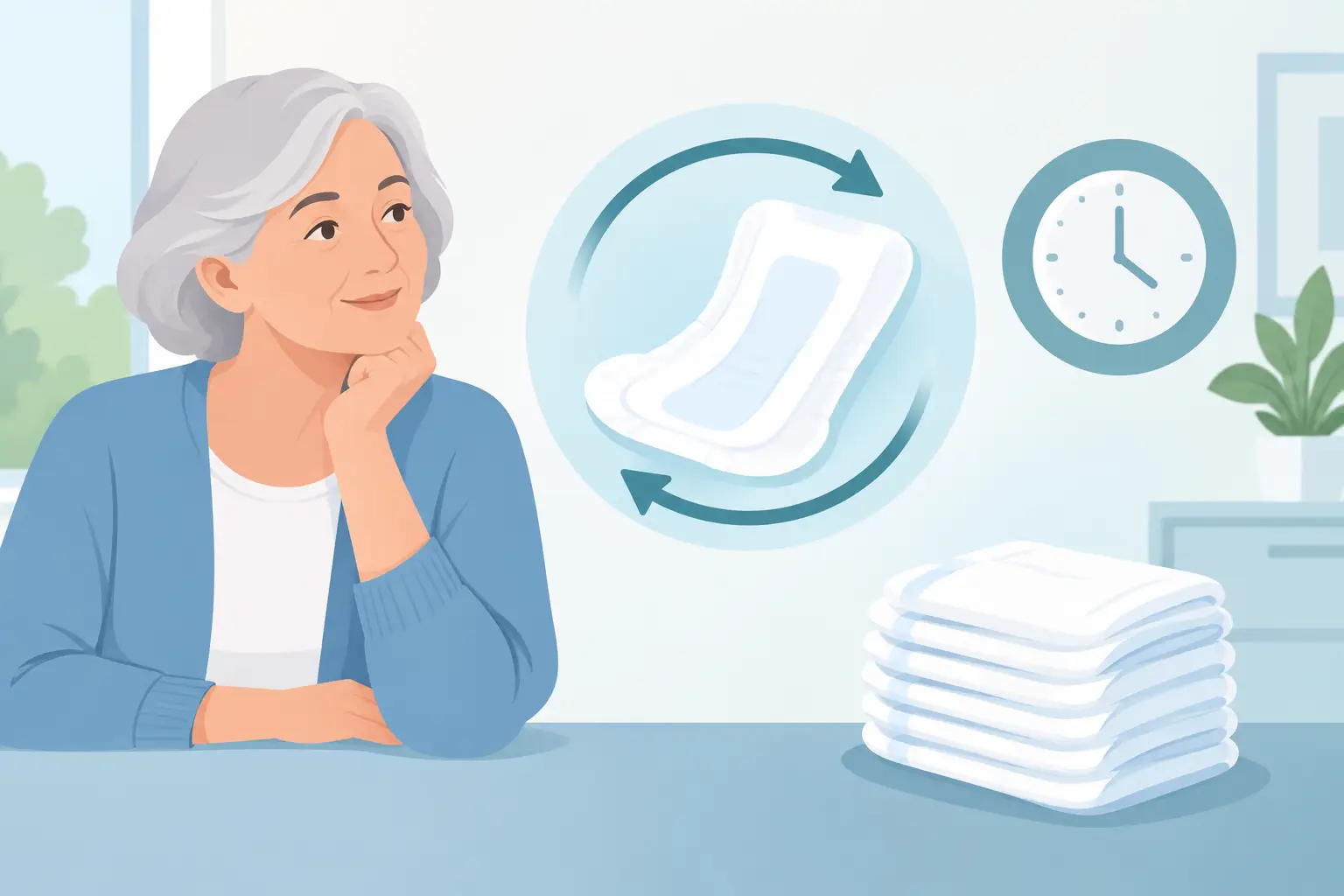
An incontinence pad should be changed based on its condition, not according to a rigid schedule. If you are wondering how often incontinence pads should be changed, the key factors to consider are the absorbency, the amount of urine or stool, the person’s skin condition and their mobility. A pad that still feels dry and fits securely does not need to be discarded as a precaution. If it is damp, saturated, has shifted out of place or is soiled with stool, it should be changed promptly.

This guidance is particularly helpful when providing care at home, as it helps balance skin protection, comfort and economical use. In care facilities, pad changes should also be included in each person’s individual care and support plan.

How often to change incontinence pads: practical guidance

For urinary incontinence, pads are usually checked several times a day and changed when needed. A fixed schedule of every three or four hours may work as a reminder for some people, but it is no substitute for an individual assessment. A high fluid intake, diuretic medication, infections or temporarily reduced mobility can significantly increase the need for changes.

The key is that the pad should absorb urine, keep the skin as dry as possible and contain odours. It is not designed to be worn until it reaches its maximum capacity. If it becomes very full, fluid may leak from the edges or be pressed back onto the skin. This increases the risk of skin irritation, maceration and discomfort.

An incontinence pad must always be changed immediately after a bowel movement. Stool can severely irritate the skin and introduce germs to the genital area. Thorough cleaning and frequent changes are essential, especially in cases of diarrhoea.

Signs that it’s time for a change

A pad should be changed if it feels damp or heavy, if visible wetness has reached the edges, or if clothing is at risk of becoming wet. A noticeable odour, a poor fit or an uncomfortable feeling of pressure are also clear signs. For people who cannot reliably communicate their needs, caregivers should also look out for restlessness, repeatedly reaching for the pad or redness.

For people with a strong urge to urinate or larger volumes of urine, a pad with greater absorbency may be more suitable than changing smaller products frequently. Conversely, a pad that is too large or thick may feel unnecessarily warm for light incontinence, restrict movement and reduce comfort. Choosing the right product therefore depends not only on the amount of urine or stool, but also on body shape, activity level and the person’s ability to use a toilet or commode chair.

Skin protection comes before a fixed changing schedule

The skin in the genital area is particularly sensitive to repeated exposure to moisture. Urine, heat and friction can weaken the skin’s natural protective barrier. This can lead to redness, burning, weeping areas or, over time, sores. Extra care is needed for people with diabetes, circulation problems, malnutrition, excessive sweating or reduced mobility.

Check the skin every time you change the pad. It should be clean, dry and free of persistent redness. Clean gently with lukewarm water or suitable pH-balanced skin care products. Heavily perfumed products and vigorous rubbing can cause further irritation. Then gently pat the skin dry, especially in skin folds.

Skin protection products can be useful for skin that is under stress or at risk. However, they should be used sparingly and appropriately for the care being provided. Very greasy creams can impair the absorbency of certain pads if they get directly onto the absorbent surface. If there are open sores, pain, persistent redness or suspected fungal infection, seek medical or professional nursing advice.

The right pad reduces unnecessary changes

Incontinence pads vary in shape, size and absorbency. Light pads are suitable for a few drops or occasional urine leakage. Moderate to severe incontinence requires more absorbent pads, which are generally worn with fixation pants. Fixation pants hold the product close to the body without compressing the absorbent area. Regular underwear usually does not provide reliable support.

A common mistake is wearing several pads on top of one another. This can make it harder for fluid to reach the absorbent core, cause the products to shift more easily and put greater strain on the skin. Instead, use a pad with an absorbency level suited to the actual need.

Anatomy also plays a role. Pads for women and men may have different shapes. For bowel incontinence, being bedridden or very severe urinary incontinence, pads may not be sufficient. Anatomical pants, incontinence briefs or other care systems may be more suitable. Product selection should be discussed with a healthcare professional, especially when incontinence aids have been prescribed.

Changing during the day and at night

During the day, changing as needed is usually easy to manage if the toilet is accessible and the person can communicate their needs. Regular toilet visits can reduce the number of wet pads. This does not mean independently reducing fluid intake. Too little fluid can contribute to circulatory problems, constipation and urinary tract infections. Any medically prescribed fluid intake or restrictions always take priority.

At night, an individual solution is needed. For some people, a sufficiently absorbent overnight product is useful so that sleep is not interrupted by scheduled changes. Others need a nighttime check or change because of large urine volumes, diarrhea, skin problems or an individual care plan. Waking someone routinely without a nursing reason can affect sleep and recovery.

In the morning, pay particular attention to the condition of the skin, the fit of the pad and any leaks. Repeatedly wet bed linen is not an unavoidable problem; it is a sign that the absorbency, size, application technique or care system should be reviewed.

Changing safely at home and in professional care

Before changing, prepare everything you need: a fresh pad, fixation pants, disposable gloves, underpad, and products for cleansing and skin care. This helps avoid leaving the person uncovered for unnecessarily long or making them stand for too long. Hand hygiene before and after changing protects everyone involved.

Carefully remove the used pad from front to back. This direction reduces the risk of transferring germs from the anal area toward the urethra. Clean the skin from front to back as well, checking for redness, pressure sores, swelling or an unusual odor. Position the new pad centrally. It should fit snugly enough to absorb fluid securely, but should not dig into the skin or form creases.

For people with limited mobility, back-friendly techniques and, where appropriate, transfer and positioning aids are important. No one should be moved alone if there is a risk of falling or if the physical strain on family caregivers is too great. Professional caregivers also follow hygiene requirements, care plans and clear documentation procedures.

When to seek professional advice

A sudden, significant increase in the need for changes may indicate a change in health. Burning when urinating, fever, lower abdominal pain, blood in the urine, an unusually strong odor or new confusion in older people should be medically assessed. A rapid increase in incontinence or recurring leaks despite using a suitable pad also warrant advice.

Nursing professionals, medical practices and specialist staff at medical supply stores can help select the right absorbency and product shape. If incontinence aids have been prescribed, the health insurer’s requirements and the individually agreed care plan must also be taken into account. Facilities benefit from regularly reviewing usage: the goal is not to use the fewest products possible, but to provide safe, skin-friendly continence care that meets individual needs.

A well-fitting pad provides reassurance without unnecessarily dictating everyday life. Monitor changes, check the skin consistently and adapt care to the actual situation—so that dignity, comfort and quality of care remain at the center.

Posted on

Compare a bathtub lift and a shower chair

Compare bathtub lifts and shower chairs

When comparing a bathtub lift and a shower chair, you should look beyond the price or the space available. What matters is how safely the transfer can be completed, which movements are still possible, and whether daily personal care is managed independently, with help from family members or in a professional care setting. Both aids can significantly reduce the risk of falls in the bathroom, but they address different needs.

The key question: bathtub or shower?

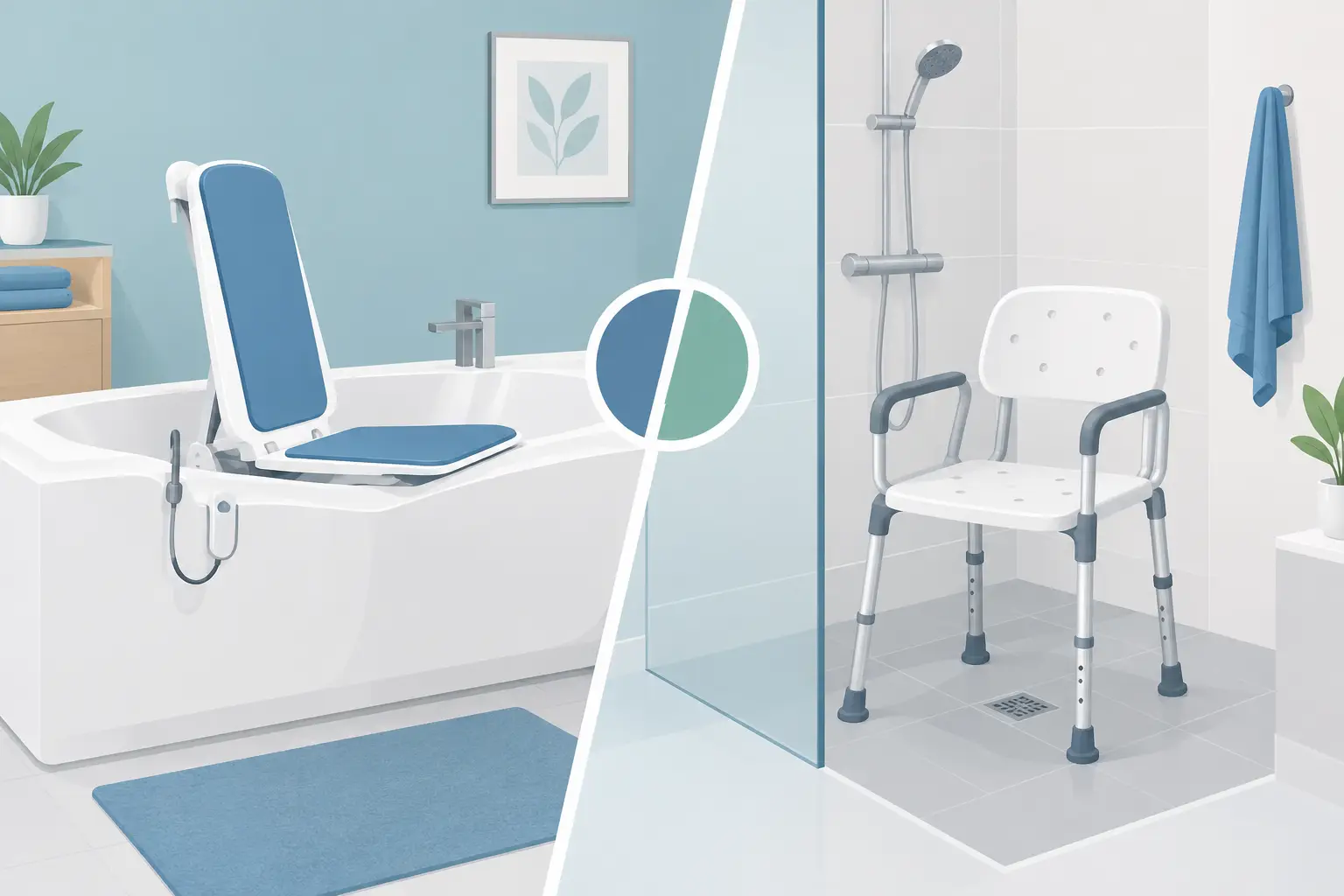
A bathtub lift helps a person get into an existing bathtub. First, they sit on the lowered seat at the edge of the tub. The lift then lowers them electrically into the tub and raises them again after bathing. This makes it possible to enjoy a full bath without having to step over the high tub edge.

A shower chair is used in a level-access or low-threshold shower. It allows people who cannot stand for long, walk with confidence, or who experience pain, dizziness or reduced stamina to shower while seated. It must still be possible to access the shower safely. If the shower has a high tray, an additional step-in aid may be needed.

The existing bathroom setup is therefore the first thing to consider. If you regularly use a bathtub and do not want to give up bathing, consider a bathtub lift. If you have an easily accessible shower, a shower chair is usually the simpler, more space-saving option.

Comparing a bathtub lift and a shower chair: everyday safety

Safety depends not only on the product, but also on how it works with the person’s physical abilities and bathroom. A bathtub lift reduces the height difference when getting in and out. However, the person must be able to transfer sideways onto the seat. This requires sufficient trunk stability, mobility in the hips and knees, and a safe transfer setup. With pronounced hemiplegia, severe balance problems or poor sitting stability, a transfer board, a grab bar or assistance from a caregiver may be necessary.

A shower chair eliminates the need to transfer over a bathtub edge. This is a significant advantage for people who are unsteady on their feet. However, the chair must not slip on a smooth or uneven floor. Non-slip feet, height-adjustable legs and a sturdy frame are therefore essential. Models with a backrest and armrests provide extra support, but take up more space and can make sideways transfers more difficult.

In both cases, secure grab bars, non-slip flooring and an easily accessible faucet are part of a safe bathroom setup. A towel rail or a lightweight bathroom furniture handle is not a suitable grab bar. It is not designed to withstand heavy pulling forces and may come loose.

Assessing independence realistically

An honest assessment of a person’s everyday abilities is more helpful when choosing an aid than a general diagnosis. Can they sit securely? Can they turn and transfer sideways? Do they have enough hand strength to support themselves? Are they at increased risk of circulatory problems when taking a warm bath?

A bathtub lift can be very helpful for people with reduced leg strength, but it requires a controlled seated transfer. A shower chair is often a better choice when personal care needs to be quick or standing is only possible for short periods. For progressive neurological conditions or increasing care needs, also consider whether the aid will still be suitable in a few months.

Comfort, hygiene and physical strain

A full bath can offer warmth, relaxation and a familiar part of everyday life. For people with joint problems, muscle tension or chronic pain, this is an understandable wish. Bathtub lifts are designed to lower the user in a controlled manner. Many models have a backrest, a hand control and a rechargeable battery. Depending on the design, the seat can be folded up to save space in the tub or removed for cleaning.

There are also some typical limitations: when lowered, the user sits deep in the tub, with their legs often raised or bent. People who get cold quickly, become short of breath in warm conditions or have difficulty sitting fully upright may not find bathing comfortable. Cleaning a bathtub with an installed lift also requires planning, especially if caregivers are involved.

Showering is usually quicker, uses less water and is easier to fit into a daily routine. A shower chair allows the user to sit comfortably while washing, shampooing or caring for their feet. It often reduces physical strain on the caregiver, as less support is needed while standing. However, a standard shower chair may not provide enough support for people with extensive care needs. In such cases, shower stools, shower chairs with armrests and a backrest, mobile shower and toilet chairs, or special transfer solutions may be suitable.

Check space requirements and technical conditions

Before buying, take measurements in the bathroom rather than estimating them. For a bathtub lift, the tub’s internal width and length, the height of its rim, and the position of the faucet and shower screen are all relevant. There must also be enough space in front of the tub for transfers. A door that opens inward or a washbasin positioned too close can significantly restrict safe access.

Many bathtub lifts use a rechargeable battery and do not need to be connected to the mains in a wet area while in use. Even so, the charging interval, ease of use of the hand control and maximum weight capacity must suit the intended use. Never choose a weight capacity that is only just sufficient. Clothing, assistive devices and any help needed during transfers all affect the actual load.

For a shower chair, consider the shower area, drain position and door width. A chair with four legs needs a flat, sufficiently large area. In very small shower cubicles, compact stools are often more practical, but provide less lateral support. In level-access showers, make sure that water drains properly and does not collect around the feet.

Which design suits which needs?

A simple shower stool is suitable for people who can sit safely and only need relief from prolonged standing. A shower chair with a backrest is useful if trunk stability is limited. Armrests make it easier to stand up, but can get in the way during a side transfer. Height adjustment helps achieve a seat height that allows the feet to rest securely on the floor without bending the knees too much.

Bathtub lifts differ in features such as seat surface, backrest angle, lifting height, weight and ease of removal. A particularly lightweight lift is easier for family members to remove and clean. A model with a higher seat position can make transfers easier. If the person can only transfer with assistance, check whether the caregiver can work without straining their back and whether additional transfer aids are needed.

For institutions and outpatient care settings, reprocessing is also a consideration alongside suitability. Surfaces should be easily accessible, smooth and resistant to disinfectants. When several people use the equipment, clear responsibilities for cleaning, function checks and battery charging are essential.

Costs, assistive device provision and advice

Prices vary considerably. A shower stool or simple shower chair is usually less expensive than an electric bath lift. However, the purchase price alone does not reflect the benefits. Choosing an unsuitable assistive device can quickly lead to additional costs and effort due to modifications, a bad purchase or unsafe care situations.

Depending on medical necessity, provision through statutory health insurance may be possible. This generally requires a doctor’s prescription and an assessment of the individual’s needs. Which specific product is approved depends on the person’s needs, contracted providers and the applicable requirements. In cases of care dependency, grants for measures to improve the home environment or care aids may also be available under certain conditions. Clarifying this early with the doctor’s office, health insurance provider, long-term care insurance fund or a specialist adviser can prevent delays.

When selecting a product through Servomed, carefully check the product specifications, maximum load capacity, dimensions and the intended place of use. For more complex transfers in particular, advice from an occupational therapist, physiotherapist or qualified assistive device adviser is worthwhile, as they can directly assess the person’s mobility.

The right solution supports everyday life

A shower chair is often the right choice when safe daily hygiene, a short routine and easy access are the priorities. A bath lift is suitable when the bathtub is to remain in place and a seated transfer can be carried out reliably. The more comprehensive assistive device is not automatically the better one; the right choice is the one that helps the person with daily personal care safely, with dignity and as independently as possible. Before making a decision, take the time to consider measurements, movements and the support actually available at home – this provides peace of mind that matters every day in the bathroom.

Posted on

Using anti-embolism stockings correctly

How to use anti-embolism stocking prescriptions correctly

After surgery, during prolonged bed rest or in a period of significantly reduced mobility, a prescription for anti-embolism stockings may form part of a preventive care plan set out by a doctor. It is not just the stockings themselves that matter, but the combination of individual risk of thrombosis, correct sizing, proper application and the prescribed wearing time. For patients, family members and care staff, this means the medical aid should suit the specific medical situation and be used reliably every day.

When anti-embolism stockings are prescribed

Anti-embolism stockings, often also called thromboprophylaxis stockings, support venous blood flow in the legs. They apply a defined level of pressure and are primarily intended to help prevent venous thrombosis in people who are resting or have limited mobility. Typical situations include a hospital stay after surgery, temporary immobility following an injury or illness, and prolonged bed rest while receiving care at home.

The treating doctor decides whether a prescription is needed, based on several factors. These include the type and extent of a procedure, mobility, age, previous thromboses, chronic conditions, body weight and medications. After major surgery, medication-based prophylaxis may also be necessary. If prescribed by a doctor, stockings do not replace this treatment.

Anti-embolism stockings are not automatically the right choice for travel or occasional heavy legs either. Depending on the findings, medical compression stockings or other measures may be more appropriate. Self-treatment without medical advice can mask symptoms or be unsuitable for certain vascular conditions.

Understanding the difference between anti-embolism stockings and compression stockings

Both types of stockings apply pressure to the leg, but they are designed for different uses. Anti-embolism stockings are primarily intended to prevent thrombosis in people who are bedridden or have significantly limited mobility. They are often used in clinical settings and, when prescribed, can also support care at home.

Medical compression stockings, on the other hand, are used for conditions such as venous insufficiency, varicose veins, oedema, after a thrombosis or for lymphatic problems. They are divided into compression classes and must be precisely matched to the diagnosis, leg measurements and treatment goal. This distinction is particularly important for patients who are walking regularly again: as mobility increases, a different type of care may become medically appropriate.

The product name on the prescription should therefore not simply say “support stockings”. Everyday support stockings do not provide the same therapeutic function and are not a substitute for a prescribed medical device.

What matters on a prescription for anti-embolism stockings

The doctor’s prescription is the basis for obtaining the product through a medical supply store or specialist supplier. It should state the diagnosis or indication and describe the required product as clearly as possible. The more precise the details, the easier it is to avoid supplying an unsuitable model, the wrong length or an incorrect size.

In practice, the type of stocking, quantity, length—knee-high or thigh-length—and any special requirements may be relevant. Open or closed toes, skin sensitivity, wound dressings, and the ability to put the stockings on and take them off independently also influence the choice. For one-sided symptoms or following certain procedures, the medical prescription may differ from the usual provision for both legs.

Whether and to what extent statutory health insurance covers the costs depends on medical necessity, the medical aid agreement, and the individual requirements of the insurer. Approval may be required in some cases. The prescription, insurance card and any hospital discharge documents should therefore be ready in good time. Care facilities benefit from clearly documenting the prescription, size, need for replacement, and planned wearing time in the care records.

The right size is a matter of safety

An anti-embolism stocking must not constrict or form wrinkles. A stocking that is too small can cause pressure marks, pain, or circulation problems. A stocking that is too large may slip and fail to provide the intended pressure gradient reliably. The size is therefore determined using specified circumference and length measurements, not just shoe size or clothing size.

Ideally, measurements are taken in the morning, before any swelling that may develop during the day becomes more pronounced. The leg should be relaxed, either lying down or standing, depending on the product’s measuring instructions. Professional advice is particularly useful in cases of edema, significant differences between the legs, changes following surgery, or very sensitive skin.

For care at home, it should also be checked whether the person concerned can put the stocking on independently. Limited hand strength, arthritis, back pain, or paralysis on one side often make putting it on difficult. Suitable donning aids or help from family members and caregivers can make daily use safer and less strenuous.

Put them on correctly and check them daily

Anti-embolism stockings are generally put on in the morning, before prolonged sitting or standing, or before care begins. The exact procedure depends on the model and the medical prescription. As a general rule, the stocking is first turned inside out up to the heel, positioned over the foot and heel, and then smoothed evenly up the leg. Pulling on the top edge can overstretch the material and cause wrinkles.

The fabric must lie smoothly against the leg. No pressure folds should form, especially around the ankle, behind the knee, or on the thigh. For stockings with an open toe, the fit around the toes and heel should also be checked. Gloves with a grippy surface make it easier to smooth out the material and protect sensitive tissue.

A brief skin check should be part of the daily routine. Redness, blisters, pressure marks, pain, numbness, or cold or bluish toes must be taken seriously. The stocking should not simply continue to be worn without first determining the cause. Sudden swelling in one leg, pain, warmth, shortness of breath, or chest pain requires immediate medical attention. These symptoms may indicate a thrombosis or pulmonary embolism.

Wearing time: Follow the medical prescription

There is no standard period for wearing anti-embolism stockings. After a procedure, they may be prescribed until the patient is sufficiently mobile. If mobility is permanently limited, they may need to be worn for longer, with regular medical reviews. Whether the stockings should be worn at night also depends on the specific prescription and the product used.

When patients are mobile again on a safe and regular basis, their risk of thrombosis changes. The stockings should not be continued or discontinued independently; instead, their use should be reviewed as part of follow-up care. Clear information about wearing times, skin care, concomitant medication, and follow-up appointments is particularly helpful after discharge from hospital.

Contraindications and special precautions

Anti-embolism stockings are not suitable for everyone. Their suitability must be assessed by a physician in cases of severe arterial circulatory disorders, certain forms of advanced heart failure, acute skin conditions, open wounds, or severe sensory disorders. Close skin monitoring is also advisable for people with diabetes-related nerve damage, as pressure marks may not be noticed until too late.

Caregivers and family members should not dismiss changes as normal adjustment. If the stocking repeatedly slips, cuts in, or causes pain, a new measurement or a different model may be needed. The right type of provision can only help if it can also be reliably managed as part of everyday care.

A carefully coordinated prescription, professional measuring, and daily checks provide the basis for anti-embolism stockings to offer their intended protection—with as much safety and comfort as possible during recovery or care at home.

Posted on

Guide to pressure ulcer prevention at home

Guide to Pressure Ulcer Prevention at Home

A reddened area on the tailbone, heel or hip bone may be the first sign of a pressure ulcer. It deserves attention, even if it initially seems small and there is no visible open wound. This guide to pressure ulcer prevention at home explains how family caregivers, people in need of care and community care providers can prevent pressure damage early and incorporate suitable aids into everyday life.

Why pressure ulcers can develop at home

A pressure ulcer, also called a bedsore, develops when the skin and underlying tissue are pressed against a hard surface for a prolonged period. Blood flow is restricted, cells receive too little oxygen and can become damaged. Areas of the body where bones lie close beneath the skin are particularly at risk: heels, ankles, knees, tailbone, sitting bones, hips, shoulder blades, elbows and the back of the head.

However, pressure alone does not explain every pressure ulcer. Shearing forces also play a role, for example when someone slides down in bed or is pulled across a seat while being transferred. Moisture from sweating, incontinence or wound drainage softens the skin. Malnutrition, dehydration, circulatory disorders, diabetes, sensory impairment and certain medications can further increase the risk.

Limited mobility does not automatically mean a high risk of pressure ulcers. The overall situation is what matters: Can the person change position independently? Can they reliably feel pressure or pain? What is the condition of their skin? If immobility develops after surgery, a stroke or an acute illness, the risk should be assessed early.

Pressure ulcer prevention at home starts with observation

Skin checks should be a regular part of the daily routine. Examine areas at risk in good lighting, preferably in the morning and evening, as well as after prolonged periods of lying or sitting. Look for localized redness, hardening, warmth, swelling, blisters, weeping areas or pain. Redness is not always clearly visible on darker skin. Other signs may include a change in skin color, a shiny appearance, warmth, hardness or tenderness to pressure.

A practical test for lighter skin: briefly press a finger on the reddened area. If it does not turn pale, this may indicate non-blanchable redness. The area should then not be subjected to further pressure. Do not rub or massage reddened areas. This can cause further damage to tissue that is already at risk.

Seek medical advice promptly if there is non-blanchable redness, a blister, open skin, increasing pain or fever. People with diabetes, circulatory disorders or reduced pain sensation should have any changes assessed by a medical professional as early as possible. An existing pressure ulcer requires professional wound care and an individualized pressure-relief plan.

Relieving pressure: movement, repositioning and sitting time

Pressure relief is the most effective measure. Anyone who is able to should be encouraged to make small, regular movements: change position in bed, shift their weight in a chair, move their feet or briefly stand with support. Small, frequent movements are often more realistic and gentler than infrequent, strenuous attempts to mobilize.

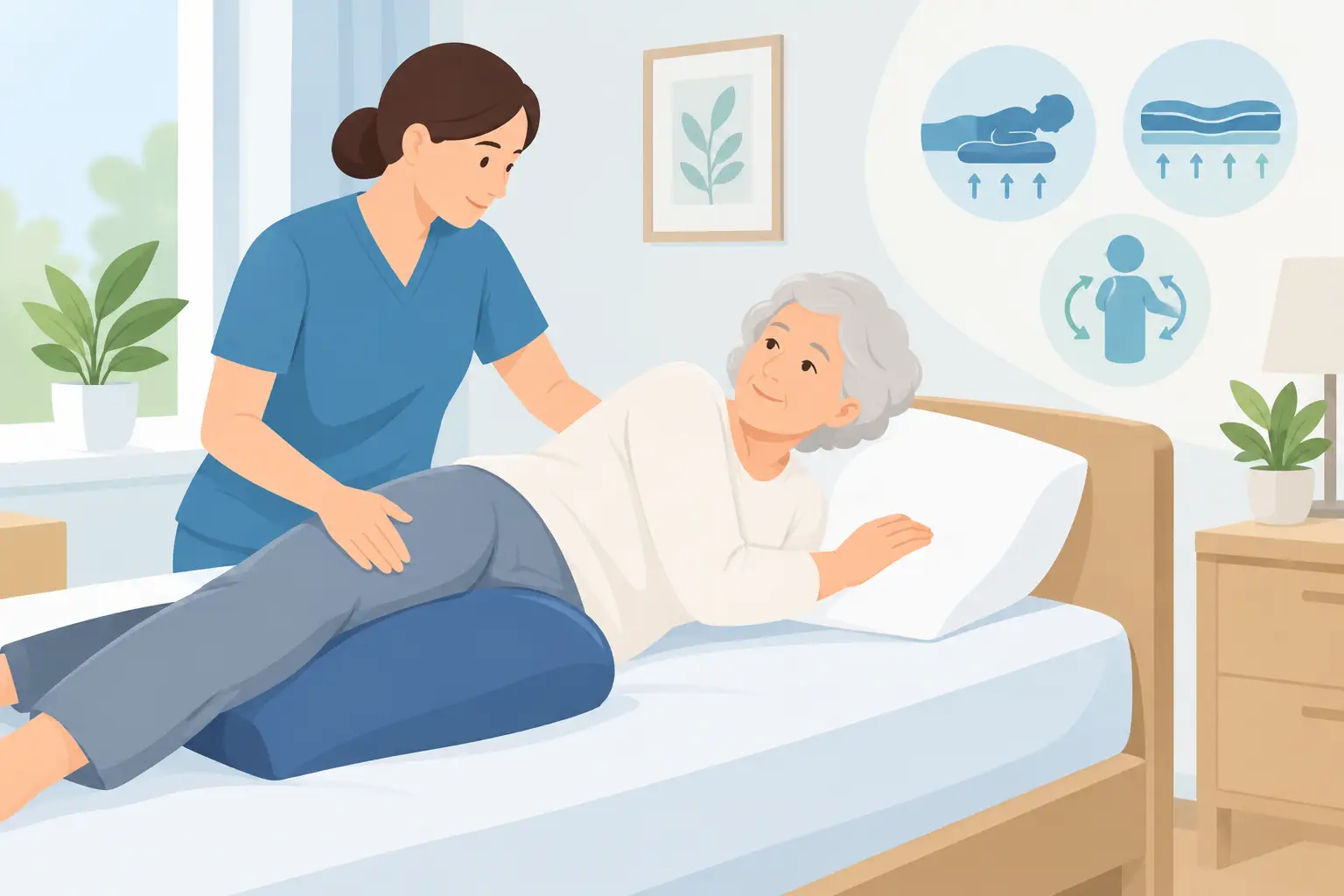
For people who cannot reposition themselves, positioning should be planned individually. A rigid schedule based on the clock does not work for everyone. Skin condition, mobility, pain, sleep quality, mattress type and time spent sitting all determine how often pressure needs to be relieved. Qualified nursing staff or the treating physicians can establish a suitable repositioning schedule. At night in particular, a balance must be struck between necessary pressure relief and restful sleep.

When repositioning someone, do not pull them across the sheet. Use suitable sliding or transfer aids to reduce friction and shear forces. When lying on their back, the person’s heels must be suspended so they do not rest on the mattress. A pillow under the lower legs can help, provided it does not overextend the knees uncomfortably or cause pressure sores on the Achilles tendon.

When sitting, pressure on the tailbone and sit bones is high. Sitting for a long time in a wheelchair or armchair can therefore be problematic, even with a good mattress. Check sitting time, posture and the person’s ability to shift their weight. Their feet should rest securely on the floor or on a footrest so they do not slide forward or down.

Choosing the right pressure ulcer prevention aids

Pressure ulcer prevention aids complement movement and proper positioning, but do not replace them. The choice depends on the person’s risk, weight, mobility, body shape, care environment and any existing skin changes. A high-quality solution is only effective if it is adjusted correctly and suits the person’s actual situation.

Pressure-relief mattresses distribute pressure more effectively than conventional mattresses. Depending on the level of risk, options include foam systems, alternating pressure mattresses and other specialized systems. Alternating pressure systems can be useful for people with severely limited mobility, but they need to be adjusted correctly and checked regularly to ensure they are working properly. Some people find the alternating air cells unsettling or sleep less well on them. This feedback should be taken into account when choosing a system.

Seat cushions can reduce pressure in wheelchairs, care chairs and other seating. The cushion’s shape, size, cover and load capacity, as well as the person’s individual sitting position, are all important. A cushion that is too soft or incorrectly positioned can worsen posture and increase shear forces. Ring cushions are generally not suitable for pressure ulcer prevention because they can concentrate pressure around the edges.

Specialized heel protectors and positioning cushions are available to relieve pressure on the heels. Positioning cushions help maintain a stable side-lying or tilted position. Transfer aids, bed grab rails and suitable care beds can make mobilization and repositioning easier. Servomed offers home care aids in a range of options – before choosing, it is important to clearly establish the need, dimensions and care objectives.

Protect the skin without over-caring for it

Clean, dry and intact skin is more resilient. Wash with lukewarm water and mild products. Carefully pat skin folds dry instead of rubbing them vigorously. For people with incontinence, prompt care, gentle cleansing and suitable skin protection are important. Incontinence products should be absorbent and fit well, but must not constrict or crease.

Skin care products should be suited to the skin. Depending on the material, products with a high fat content can impair the absorbency of incontinence products. Powder can clump and cause friction. If the skin is sensitive, already damaged or persistently moist, ask nursing professionals about a suitable skin protection strategy. Bed linen, clothing and pads should also be smooth, dry and free of creases.

Nutrition and fluids as part of prevention

Skin and tissue need adequate energy, protein, vitamins, minerals and fluids. Unintentional weight loss, eating small amounts, chewing or swallowing difficulties, and loss of appetite increase the risk of pressure ulcers. So keep an eye not only on the skin but also on meals, fluid intake and weight changes.

General fluid intake recommendations are not suitable for everyone. People with heart or kidney conditions may need to follow restrictions set by their doctor. If someone eats or drinks significantly less, loses weight or frequently skips meals, consult their medical practice or a nutrition professional. Nutritional drinks or a high-protein diet should be included in a care plan developed with a healthcare professional.

Clearly agree on responsibilities in daily care

Pressure ulcer prevention is more effective when observations are recorded rather than relying on memory. A simple plan can note which areas of skin to check, when the person was repositioned or mobilised, how long they remain seated and what changes occur. This is especially helpful when several family members, a home care service or a caregiver are involved.

For people with statutory health insurance, a prescription for certain medical aids may be possible, depending on medical necessity. The specific care provided, approval and coverage of costs depend on the diagnosis, contractual arrangements and health insurer. For complex needs, the prescribing doctor, care advisor, medical supply store and health insurer should work together at an early stage.

Good pressure ulcer prevention at home is not about using as many cushions as possible or interrupting activities as often as possible, but about maintaining an attentive, respectful routine. Taking skin changes seriously, relieving pressure in good time and seeking support helps protect not only the skin, but also comfort, sleep and dignity in everyday life.

Posted on

An Overview of the Best Daily Living Aids for Osteoarthritis

The best everyday aids for osteoarthritis at a glance

If opening a screw-top jar causes pain in your fingers, getting up from the sofa becomes a challenge or stepping into the shower feels unsafe, the best daily living aids for osteoarthritis are more than just comfort products. They can make everyday tasks easier, relieve strain on your joints and help you maintain your independence at home. The key is not to acquire as many aids as possible, but to target the barriers in your daily routine.

Osteoarthritis often affects the fingers, thumbs, knees, hips, shoulders or spine. The right solutions vary considerably, depending on which joints are affected and the severity of your symptoms, limited mobility or loss of strength. A reaching aid, for example, is no substitute for a secure grab bar in the bathroom, and a dressing aid is only useful if bending or reaching is actually difficult.

Daily Living Aids for Osteoarthritis: Choosing by Area of Life

It is best to start by looking at the tasks that regularly cause pain or uncertainty, or require help from someone else. For a few days, observe typical activities: personal care, getting dressed, meals, housework, moving around indoors and going out. This will help you identify specific needs and avoid unnecessary purchases.

Aids should not eliminate movement altogether. With osteoarthritis, adapted activity, movement guided by a doctor or therapist, and good management of physical strain remain important. Daily living aids help conserve energy by reducing awkward twisting, the need for a strong grip or deep bending, without unnecessarily restricting independence.

For Hands and Fingers: Reduce the Need for Grip Strength

With osteoarthritis of the finger and thumb joints, small, smooth or tightly closed items are often the most difficult to handle. Ergonomically shaped handles with a larger diameter distribute pressure more evenly across the hand. Cutlery with enlarged handles, non-slip mats and two-handled cups can make eating and drinking noticeably easier.

Useful aids for the kitchen and around the home include bottle and jar openers, key turners, reachers, and electric or easy-open can openers. A non-slip mat keeps bowls and plates in place, so one hand does not have to work as hard to hold them steady. If twisting movements are painful, a good opener is often more helpful than products that are simply especially small or lightweight.

It is also worth taking a closer look at personal care: tube squeezers, pump dispensers for soap and lotion, and toothbrushes with thickened handles reduce strain on the small finger joints. For more severe symptoms, a hand orthosis, for example to stabilise the thumb carpometacarpal joint, may be medically indicated. It should be professionally fitted, and how long it is worn should be discussed with a doctor, an orthopaedic technician or an occupational therapist.

For Knees and Hips: Get Up and Move Safely

For people with osteoarthritis of the knee or hip, low seats, long distances and a lack of support are common sources of strain. A raised toilet seat can make sitting down and standing up much easier by reducing the degree to which the hip and knee joints need to bend. It is important to choose one that is securely fitted, the right height and easy to clean safely.

In the living area, rising aids for armchairs or beds can help, provided the furniture is suitable for them. A firm seat cushion can improve seat height, but it must not slip or make the seat unstable. Dressing aids for socks and stockings, long-handled shoehorns and reachers are especially practical for people with limited hip mobility.

A cane, forearm crutches or a rollator may be suitable if you experience pain, feel unsteady or have a significantly reduced walking distance. These aids need to suit your height, grip strength and living situation. A rollator offers a seat and space for carrying items, but requires sufficiently wide paths and reliable brakes. In cramped homes, a lightweight cane may be the better choice. A healthcare professional should check that it is adjusted correctly and used safely.

Make your bathroom safe and easy on your joints

Bathrooms combine slippery floors, moisture, and the need to turn and maintain your balance. This increases the risk of falls, especially if you have osteoarthritis of the knee, hip or spine. A shower stool or chair lets you wash while seated and saves energy. Models with armrests provide extra support when standing up, but take up more space.

Grab bars by the shower, bathtub and toilet must be securely installed and able to support your weight. Suction-cup grab bars can be useful when travelling or for temporary support, but they are not a reliable substitute for professionally installed grab bars. For long-term use, the wall material, installation and regular checks all matter.

A non-slip mat, a long-handled bath sponge and a showerhead with an easy-to-use holder round out the equipment. A bathtub board or bath seat can make getting into a bathtub easier. Whether a shower, bathtub board or shower chair is suitable depends on your mobility, the width of the bathroom and the available space.

Reduce unnecessary strain in the kitchen and around the home

At home, strain often comes from carrying, bending and repeatedly reaching for things. Items you use often should be kept between hip and shoulder height. Heavy pots, crates of drinks and food supplies should not be stored in low cupboards if possible. A small kitchen trolley can transport dishes and meals, so you do not have to carry heavy items over long distances.

Lightweight pots with two easy-to-grip handles, cutting boards with features to hold food in place, and lever aids for taps can reduce strain on your hands and shoulders. If you have knee or hip osteoarthritis, a tall kitchen stool can help you alternate between sitting and standing for tasks such as preparing vegetables. However, sitting for too long can also be unhelpful if it makes your joints stiff. It is better to plan short, regular changes of position.

Safety should take priority over reach around the home. A reacher is suitable for picking up lightweight objects from the floor or from high shelves. It is not a safe solution for heavy, breakable or hot items. In these cases, reorganising your home, asking family members for help or, if appropriate, using a suitable service is a better choice.

How to choose the right aids

An aid is suitable if it makes a specific task safer or less painful and is actually used in everyday life. When choosing one, pay particular attention to weight capacity, slip resistance, ease of cleaning and whether it can be operated with limited grip strength. For mobility aids, also consider weight, width, brakes, seat height and the availability of replacement parts.

For aids closely related to mobility, care or fall prevention, we recommend seeking advice from a doctor’s office, therapist or qualified healthcare professional. Occupational therapists can assess everyday activities and teach techniques for working in a way that is easier on the joints. If medically necessary, certain aids can be prescribed by a doctor. Whether and to what extent your health insurance provider covers the costs depends, among other things, on the prescription, the aid and the terms of your insurance contract.

For family members and professional caregivers, the principle is: provide support only where it is needed. Taking over too many tasks can cause existing abilities to decline more quickly. The right combination of aids, home adaptations and enough time for daily routines often preserves more independence than taking over everything.

Small changes can make a big difference

Not every improvement requires a specialised medical product. Sturdy shoes with non-slip soles, light switches within easy reach, clear walking paths without loose rug edges and frequent breaks can make everyday life much easier. Periods when pain is mild or absent are often better for demanding tasks than times when morning stiffness or exhaustion is more pronounced.

Servomed offers daily living aids, mobility aids, and bathroom and care equipment in clearly organised product categories, making it easier to choose solutions according to where they will be used and the support required. Start with the task that takes the most energy: making it safer and easier can make everyday life not only simpler, but also more independent.