Posted on

How to choose the right folding lightweight wheelchair

Choosing the Right Lightweight Folding Wheelchair

A folding lightweight wheelchair is a practical choice when mobility should not be limited by the weight of the mobility aid, narrow doorways, or the car boot. It can make everyday life much easier for people with limited mobility, those recovering from surgery, or anyone who needs support temporarily. However, a low weight alone is not enough: seat comfort, reliable brakes, the right dimensions, and the intended use all need to be taken into account.

Who is a folding lightweight wheelchair suitable for?

Lightweight wheelchairs are manual wheelchairs designed with frames and components that keep their overall weight relatively low. Aluminium frames are often used. The design is usually foldable, allowing the wheelchair to be stored compactly for car journeys, medical appointments, rehabilitation, or visits.

This type of wheelchair is particularly suitable for people who can propel themselves at least some of the time or are pushed by family members or care staff. A folding model can also be a practical solution as a second wheelchair for trips outside the home. However, anyone who relies on a wheelchair permanently and over longer distances should pay particular attention to seating adjustments, the type of propulsion, and the available customisation options.

A low weight is helpful not only for the person using the wheelchair. Family members and professional caregivers also benefit when the wheelchair needs to be lifted for transport, loaded into a vehicle, or moved over small obstacles. Even so, the lightest wheelchair is not automatically the right one. Stability, weight capacity, and features should not be sacrificed just to save a few kilograms.

Folding lightweight wheelchair: these dimensions matter

When choosing a wheelchair, people often compare weight and price first. In practice, however, its dimensions are just as important. The wheelchair needs to fit through the doorways in the home, into the bathroom and lift, and, where necessary, along narrow hallways. The overall width is particularly important, as it is determined by the seat width, side panels, and wheels.

Choosing the right seat width and depth

The seat should provide enough room to move while still offering adequate lateral support. As a guide, measure the width of the pelvis while seated and allow a little extra room on both sides. A seat that is too narrow can contribute to pressure sores and pain. A seat that is too wide, on the other hand, makes it harder to maintain a stable, upright position and can make self-propulsion more difficult.

Seat depth also matters. It should support the thighs without pressing into the backs of the knees. There should be a small gap between the front edge of the seat and the back of the knees. If trunk stability is severely limited, there is a risk of pressure ulcers, or there are complex orthopaedic needs, a standard seat is often not sufficient. In that case, a healthcare professional should assess the requirements and, if needed, recommend a suitable seat cushion or a more individually tailored wheelchair.

Backrest, armrests, and footrests

A folding backrest often reduces the amount of space needed for storage. It is especially practical if the wheelchair is regularly transported in a car. However, for comfortable seating, the backrest must provide sufficient support and suit the user’s level of trunk control.

Removable or flip-up armrests make side transfers easier, for example from a bed or wheelchair to a chair. Swing-away or removable leg rests can simplify transfers to the front and reduce the transport dimensions. If you have oedema, limited knee mobility or have undergone certain operations, height-adjustable leg support may be medically beneficial. This feature should be chosen for a specific reason, not just as an optional extra.

Comparing weight, folded dimensions and load capacity

The wheelchair’s own weight is often stated as the total weight. However, when lifting it into a car boot, it is important to know which parts can be removed. On many models, the large drive wheels, footrests or leg rests can be removed. This significantly reduces the weight of the frame that needs to be lifted.

The folded dimensions show how much space the wheelchair takes up when folded. Before buying, compare its width, height and depth with the available space in your car boot, at home or in the transport vehicle. A model may be lightweight but still take up a lot of space because of its large wheels.

The maximum load capacity must be suitable for the user and any items they carry. Bags, oxygen equipment and other aids affect the load and can also influence stability. Do not exceed the manufacturer’s stated maximum load. People with a higher body weight need a model designed for this purpose, with a suitable seat width and sufficient load capacity.

Everyday safety: brakes and anti-tip protection

Parking brakes are standard on manual wheelchairs. They keep the wheelchair secure when getting in or out, during transfers and when parked on level ground. The brakes must be easy to reach and operate, and correctly adjusted. Tyre or brake mechanism wear can reduce braking performance and should be checked regularly.

For caregivers, brake levers on the push handles are useful, especially on slopes or uneven terrain. They allow the wheelchair to be slowed down in a controlled manner while moving. Anti-tip wheels can provide extra protection if there is a risk of the user tipping backwards when standing up, crossing small thresholds or going up an incline.

Safe operation also depends on the tyres and wheel size. Small wheels are compact and well suited to use with a caregiver on smooth, level floors. Large handrim wheels allow users to propel themselves more independently. On cobblestones, country tracks or very uneven surfaces, particularly lightweight, compact standard models can quickly reach their limits. For these settings, consider suitable wheels, a sturdy design and, if necessary, a different type of wheelchair.

Comfort is part of safe care

A wheelchair is often used for longer than originally planned. That is why comfort should not be assessed only during a brief visit to a medical supply store or on the first test ride. Important features include a pressure-relieving seat, comfortable armrests, suitably positioned footplates and secure support for the feet. If the feet dangle or the knees are held too high for long periods, this can affect posture and circulation.

A suitable seat cushion is particularly important for people at increased risk of pressure ulcers. A basic cushion is no substitute for targeted pressure relief. If the user has sensory impairments, paralysis, severely limited mobility or existing skin damage, the choice should be discussed with a healthcare professional.

Push handles also deserve attention. Height-adjustable handles can reduce strain on family members and care staff when pushing the wheelchair. If the handles are too low, it is easy to develop poor posture. This difference is particularly noticeable when travelling around the home, in care facilities or on hospital grounds every day.

Planning for use at home, on the go and in care settings

Before making a decision, it helps to consider the user’s daily routine: Is the wheelchair only needed for medical appointments, used every day at home or regularly transported in a vehicle? Are there door thresholds, steps, narrow bathrooms or a lift? Does the user need to be able to propel themselves, or will a caregiver always be available?

For home use, check door widths, turning spaces and access to the bathroom in particular. When travelling, folded dimensions, lifting weight and tyres are more important. In care facilities, it is also important that the brakes, footrests and seat are easy to clean and that the wheelchair is reliably available for different users and situations.

A foldable lightweight wheelchair may be provided as a prescribed medical aid. Whether, and to what extent, the costs are covered depends on medical necessity, the prescription and the requirements of the relevant health insurance provider. For a prescribed wheelchair, the requirements for seat dimensions, accessories and intended use should be documented as specifically as possible.

The right wheelchair does more than get someone from A to B. It can make transfers safer, reduce the physical strain on family members and help people attend appointments, maintain social connections and manage everyday journeys more independently. So take the time to consider measurements, where the wheelchair will be used and individual needs before choosing – these details are what make the difference between a wheelchair that works in theory and one that really works in everyday life.


Posted on

Choosing an oxygen concentrator for home use

Choose an oxygen concentrator for home use

Anyone who needs supplemental oxygen long term requires a supply at home that is medically appropriate and reliable in everyday life. An oxygen concentrator for home use extracts oxygen from room air and provides it for prescribed oxygen therapy. It can often be a useful supplement to or replacement for oxygen cylinders at home. However, the key factor is not just the device itself, but also ensuring it is correctly matched to the medical prescription, the selected oxygen delivery method and the home environment.

What an oxygen concentrator does

A stationary oxygen concentrator draws in ambient air, filters it and uses a molecular sieve to separate most of the nitrogen from the oxygen. The processed oxygen is delivered through oxygen tubing, usually via a nasal cannula. This therapy may be prescribed for various chronic conditions affecting the lungs, heart or pulmonary blood vessels.

Unlike a compressed gas cylinder, a concentrator does not need to be refilled regularly. However, it does require a safe electrical connection, adequate airflow and regular maintenance. A stationary device is not suitable for extended periods away from home. Depending on the prescription, a mobile oxygen supply using cylinders or a portable concentrator may be needed instead.

Oxygen therapy is a medical treatment. The flow rate, duration of use and delivery method must therefore not be changed without medical advice. More oxygen does not automatically mean better care. Incorrect settings can pose health risks, particularly for people with certain chronic lung conditions.

Oxygen concentrator for home use: choosing one based on the prescription

The starting point is always the medical prescription. It specifies how many litres per minute are needed, whether the oxygen should be delivered continuously and how many hours a day the therapy is intended to be used. These details determine which class of device is suitable.

One important distinguishing feature is the maximum flow rate. Devices for home use offer different performance ranges depending on the model. Anyone who needs a higher continuous flow rate should check specifically whether the concentrator can deliver the prescribed amount on an ongoing basis. Some portable devices, on the other hand, deliver oxygen as an on-demand pulse. This is not the same as continuous delivery and is not suitable for every prescription.

The actual usable oxygen concentration at the prescribed flow setting is also relevant. Technical specifications should always be considered in context: a device may achieve different values at a lower setting than at a higher delivery rate. For safe oxygen therapy, what matters is not a single advertised figure, but whether the device is suitable for the specific prescribed treatment.

Other factors to consider when choosing a product include weight, noise level, power consumption and ease of use. A device that runs continuously in a living room or bedroom should operate as quietly as possible without compromising its medical performance. Clearly visible controls, easy-to-read displays and audible alarms are particularly helpful for people with limited hand strength or impaired vision.

Stationary or portable?

A stationary concentrator is designed to supply oxygen at home. It stands on wheels, runs from a power outlet and, with suitable tubing, allows some freedom of movement around the rooms. This type of device is often a practical foundation for overnight use and longer periods of oxygen therapy at home.

A portable concentrator is lighter and intended for use outside the home. However, its battery life, charging time, delivery mode and maximum oxygen output must be carefully matched to the therapy. Many people need both solutions: a high-performance stationary concentrator at home and a coordinated mobile option for medical appointments, shopping or walks.

The right location protects both the patient and the device

An oxygen concentrator needs a fixed, dry, well-ventilated location. It should be left unobstructed so that curtains, furniture or laundry do not cover the air vents. Refer to the instructions for use for the minimum clearances required for the specific model. A cramped storage room, a bathroom with high humidity or a location directly next to a heater is generally unsuitable.

Connect the device directly to a suitable wall outlet. Power strips, cable reels or damaged extension cords can pose a safety risk. Oxygen production stops during a power outage. A contingency plan agreed with the supplier or care team should therefore be in place for such situations. This may include a backup oxygen supply in the form of an oxygen cylinder and knowing which contacts to reach.

Oxygen itself does not burn, but it greatly accelerates combustion. Smoking, open flames, candles, gas stoves, sparks and heat sources must therefore be kept away from where oxygen is being used. Creams, oils or ointments containing fat should also not be used on the nasal cannula, tubing connections or oxygen fittings unless they are specifically approved for oxygen therapy. Water-based care products are usually a better choice for irritated nasal mucosa.

Everyday use: small details with a big impact

Before starting, check the concentrator, power cord, filter, tubing and nasal cannula for visible damage. The tubing must be routed without kinks. Long tubing can allow greater freedom of movement, but increases the risk of tripping. In passageways and around the edges of the bed, route it so it is not pulled taut and caregivers cannot accidentally disconnect it.

The nasal cannula should fit comfortably. Pressure sores behind the ears or under the nose can occur with prolonged use and should be addressed early. Soft tubing pads, properly routed tubing and regular skin checks can help. If persistent redness, pain, nosebleeds or severe irritation of the mucous membranes occurs, seek medical advice.

If use during sleep has been prescribed, pay particular attention to how the tubing is routed. Keep the concentrator upright and easily accessible. Do not interrupt therapy because the device is perceived as disruptive. Careful placement of the device and choosing a suitable tubing length can often significantly reduce noise and tension on the tubing.

A pulse oximeter may be used for monitoring in certain care situations, but it is no substitute for a medical assessment. Readings can be affected by cold hands, nail polish, circulation problems or movement, among other factors. Symptoms such as increasing shortness of breath, confusion, bluish lips, chest pain or a marked deterioration in general health require prompt medical assessment; in the event of acute, severe shortness of breath, call emergency services.

Cleaning, maintenance and consumables

Regular care maintains the concentrator’s performance and reduces hygiene risks. How often filters need to be cleaned or replaced depends on the manufacturer’s instructions and the amount of dust in the home. A dirty air intake can impair operation. The housing is usually cleaned only with a slightly damp cloth, with the device switched off and unplugged.

Nasal cannulas, connecting tubes, humidifier bottles and filters are consumables or accessories with their own replacement intervals. These instructions should be followed consistently. When using a humidifier in particular, clean, suitable water and hygienic preparation are essential. Whether humidification is needed depends on the flow rate, symptoms and medical advice.

Repairs, opening the device or making changes to the oxygen delivery system should be handled by qualified professionals. Alarm messages must not be ignored. They may indicate a power failure, a kinked tube, restricted flow or a technical fault.

Organizing coverage of costs and care

For people with statutory health insurance, long-term oxygen therapy prescribed by a doctor can generally be provided as a medical aid through their health insurance fund. The specific services covered depend on the prescription, the health insurance fund’s contracted providers and the individual medical situation. These may include the device, necessary accessories, instruction, and maintenance and replacement services.

Before making a private purchase, it is advisable to coordinate care with the doctor’s office, health insurance fund or the contracted service provider. This helps prevent the purchase of a technically unsuitable device or uncertainty about reimbursement. People in need of care and their relatives benefit when instruction covers not only how to set up the device, but also emergency measures, hygiene and how to route the tube safely through the home.

A well-chosen concentrator should not dictate the daily routine, but should fit reliably into it as part of the prescribed therapy. When the device, accessories and home environment are a good fit, there is more room for what matters most: safe breathing, staying active within one’s abilities and maintaining an independent daily life at home.

Posted on

Buy a pressure-relief mattress for care needs

Buy a pressure-relief mattress when care is needed

A reddened area on the tailbone, heel, or hip bone may be the first sign that skin is at risk. If you want to buy a pressure-relief mattress, you should therefore consider more than just the price or an especially soft sleeping surface. The key factors are the individual risk of pressure ulcers, the person’s mobility, body weight, level of care required, and existing bed setup.

Suitable pressure ulcer prevention can help reduce pressure peaks and support positioning. However, it does not replace regular skin checks, encouraging movement, appropriate repositioning, adequate nutrition and fluid intake, or professional assessment of any unusual skin changes. If wounds are already present or the risk is high, the choice should be discussed with nursing professionals or the prescribing healthcare provider.

When is a pressure-relief mattress needed?

A pressure ulcer develops when tissue is exposed to high pressure for a prolonged period, often combined with shearing forces. People who cannot change their position in bed, or can do so only to a limited extent, are particularly at risk. Common risk factors include severe immobility, paralysis, pain during movement, neurological conditions, reduced pain sensitivity, malnutrition, incontinence, and very sensitive or already damaged skin.

A pressure-relief mattress is part of an individual prevention or treatment plan. For temporary bed rest after surgery, a high-quality foam mattress may be sufficient. For people with long-term limited mobility, a high body weight, or an existing pressure ulcer, an active alternating pressure system may be more medically appropriate. The type of support needed always depends on the risk assessment and the care goal.

Buy a pressure-relief mattress: Choose the right type of system

Pressure ulcer prevention systems are generally divided into passive and active systems. Both can be useful, but they serve different purposes.

Passive foam mattresses

Passive mattresses are usually made of multiple layers of viscoelastic foam or cold foam. The body sinks in in a controlled way, distributing weight across a larger surface. These models operate without a motor, are silent, and are easy to use day to day. They are often suitable for people at low to moderate risk of pressure ulcers who can still move themselves to some extent or are repositioned regularly.

Mattress quality is not determined by height alone. More important factors include appropriate pressure relief, the material’s resilience, suitability for the stated patient weight, and a breathable, easy-to-clean cover. Mattresses that are too soft or unable to support the required weight can make it harder to change position. This is particularly problematic if the person needs help getting up, transferring, or mobilising.

Active alternating pressure mattresses

Alternating pressure systems have air cells and an electric pump. The pump inflates and deflates individual cells at set intervals, periodically relieving pressure on areas of the body under strain. These systems are primarily considered for people at high risk of pressure ulcers, those with severely limited mobility, or to support the treatment of an existing pressure ulcer.

An active system requires additional care. The pump produces operating noise, needs a safe power connection and must be set up correctly. Hoses must not be kinked or become a tripping hazard. The changing feel of the surface may take some people a while to get used to. Others benefit significantly from the noticeable pressure relief. When choosing a system, you should therefore consider weight capacity, cell design, possible static operating modes and alarm functions.

Low-air-loss and specialist solutions

For complex care situations, systems are available with airflow, particularly high levels of pressure relief or additional functions to support the microclimate. They may be suitable for people who sweat heavily, those at very high risk or those with complex wound-care needs. These products should be selected as part of a professionally planned care solution. A technically sophisticated mattress is not automatically the better choice if it cannot be used correctly in day-to-day care.

Check the size, weight and bed frame

Before purchasing, you need to know the dimensions of the existing bed. A mattress should not have too much clearance at the sides or extend beyond the edge of the bed. For care beds, you should also check whether the system is suitable for an adjustable lying surface and for back and leg adjustment. An unsuitable mattress can crease, slip or lose its pressure-relieving effect.

Maximum weight capacity is just as important. This means not only body weight, but the safe user limit for the entire system as specified by the manufacturer. For higher body weights, choose a model that is expressly designed for this purpose. With active systems, weight and body shape also affect the required pressure setting.

Mattress height has practical implications: a high mattress can alter the height for getting in and out of bed and make side rails less effective. For care beds, check whether the side rails still provide the prescribed level of protection. Transfers using a rollator, wheelchair or standing aid should also be taken into account.

Cover, hygiene and care requirements

The mattress cover protects the core from moisture and soiling. For home care, covers that are both liquid-proof and vapour-permeable are especially practical. They help keep the mattress hygienic without placing unnecessary strain on the skin’s microclimate. However, incontinence products and additional overlays must not significantly impair airflow or pressure relief.

In care facilities, cleaning requirements are accompanied by procedures for reprocessing, disinfection and documentation. Removable covers, welded seams, concealed zippers and clear care instructions make safe use easier. For motorised systems, regular checks of the pump, air cells, connectors and alarms are also required.

A common mistake is placing thick, unsuitable overlays on an anti-decubitus mattress. This can significantly reduce the system’s effectiveness. Use only overlays and protective products that are suitable for the mattress system in question, and follow the manufacturer’s instructions.

Repositioning is still necessary

Even a high-quality mattress does not automatically prevent a person from developing pressure ulcers. Depending on the level of risk, regular repositioning, offloading areas of the body at risk and skin checks are still necessary. The appropriate frequency cannot be set as a general rule: it depends on skin condition, mobility, pain sensitivity, medical circumstances and the abilities of the person providing care.

Pay particular attention to redness that does not fade when pressed, warmth, hardened areas, blisters, open areas of skin or pain at pressure points. These changes should be assessed by a healthcare professional promptly. An existing pressure ulcer requires coordinated wound care and repositioning. A mattress supports this approach but cannot treat the wound on its own.

Understanding prescriptions and cost coverage

Depending on medical necessity, pressure ulcer prevention systems may be prescribed as medical aids. Whether and to what extent statutory or private health insurance covers the costs depends on the prescription, individual needs, contractual arrangements and, where applicable, prior approval. A doctor’s prescription therefore does not automatically guarantee coverage.

To ensure prompt provision, it helps to provide complete information about the risk, diagnosis, body weight, type of bed and required system type. Care facilities should also take internal procurement procedures, maintenance responsibilities and replacement needs into account. The same quality criteria apply when paying out of pocket: the product must suit the person and their care routine, not just be available at short notice.

Choosing the right option for home and care facilities

Before making a decision, it is worth checking how well the product suits the actual care situation. Can the person change position independently? How many hours a day do they spend in bed? Are there already pressure sores or a pressure ulcer requiring treatment? Is a caregiver regularly on site? Are transfers in bed performed? And can the pump be safely positioned and operated with an active system?

For home care, ease of use, cleaning requirements and quiet operation are often particularly important. In care facilities, standardisation, documented training and a reliable supply of spare parts and consumables are also important. Servomed offers pressure ulcer prevention aids as part of a broad range for home and professional care, making it possible to plan complementary products such as positioning aids, incontinence care products or nursing bed accessories to meet individual needs.

The right mattress is one that brings together pressure relief, safety and practicality for everyday use. Clarifying the risk level, bed dimensions and care routine before purchase turns a single aid into reliable support for greater comfort, skin protection and dignified care.

Posted on

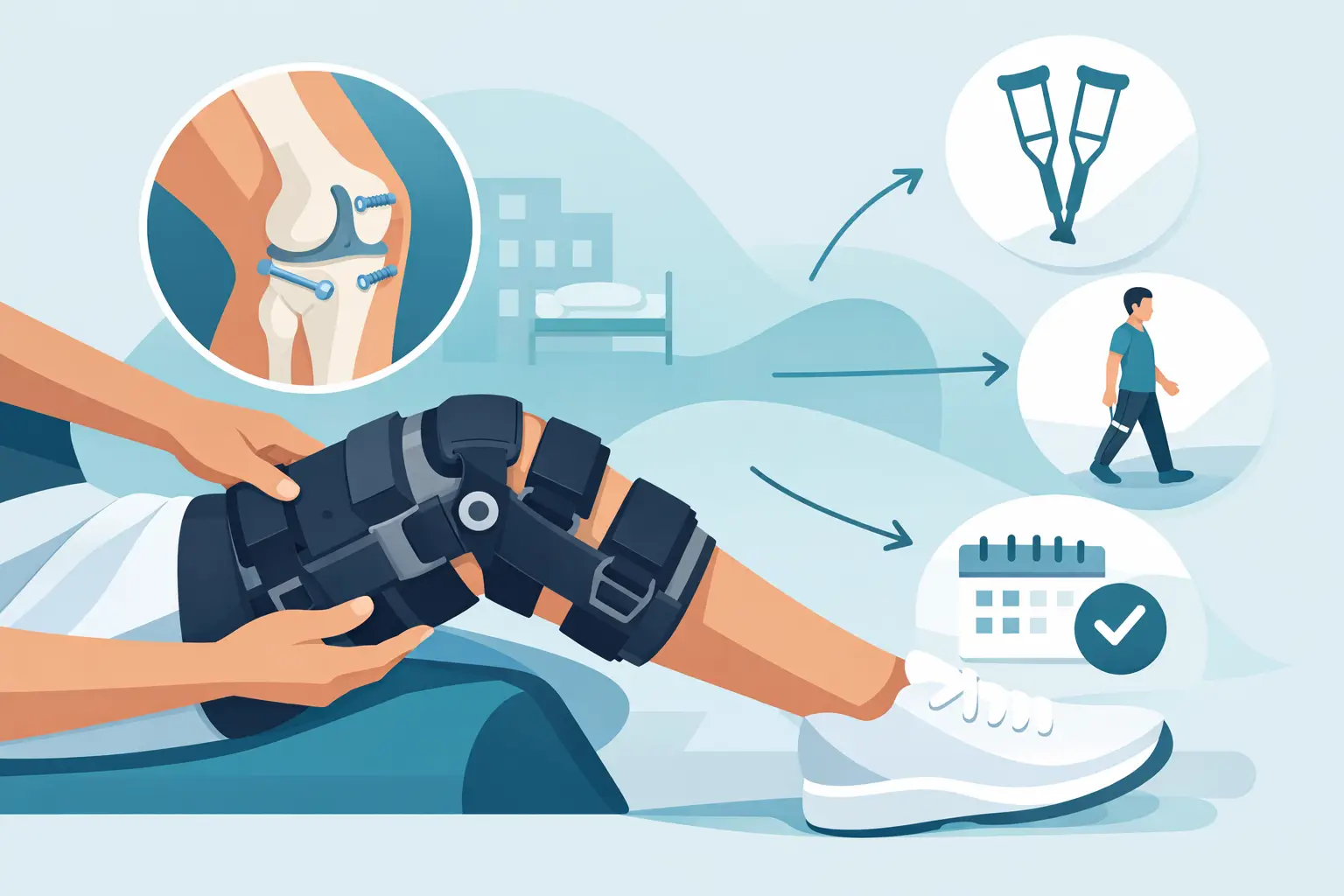
How to use a knee brace after surgery

How to use a knee brace after surgery correctly

After an ACL reconstruction, meniscus repair or knee replacement, every step is part of the healing process. A knee brace after surgery can protect the joint during this phase, guide movement and limit the range of motion as prescribed. However, it is no substitute for medical check-ups or physiotherapy. The key factors are always which structure was operated on, how stable the knee is and which post-operative protocol applies.

Knee brace after surgery: protection with a clear purpose

A brace is not a standard product for every operated knee. It is used when the knee joint needs to be temporarily immobilized, protected against certain movements or mobilized in a controlled way. For example, after ligament surgery, it can protect against excessive bending or straightening. After a meniscus repair, it can limit weight-bearing during the first few weeks. A brace is not required in every case after total knee replacement.

The doctor’s prescription specifies whether a brace is needed, which type is required and which ranges of motion are permitted. These instructions should not be changed without medical advice. With hinged knee braces in particular, limiting mobility is an essential part of the treatment.

A well-fitting brace can also help you feel more secure when standing up, walking and climbing stairs. However, it should not encourage you to increase your activity sooner than your recovery allows. Pain, swelling and your doctor’s weight-bearing instructions remain the main points of reference.

Which brace is right for your surgery?

The choice depends on the surgical site and the treatment goal. Body shape, thigh and lower-leg circumference, skin sensitivity and your ability to put the brace on yourself also play a role.

Immobilization brace for the early protection phase

An immobilization brace usually holds the knee in a set position, often in extension. It may be used when movement should initially be kept to a minimum, for example after certain ligament injuries, tendon reconstructions or complex procedures. Side bars stabilize the joint, while wide straps secure the brace to the leg.

The advantage is that movement is clearly restricted. The downside is that wearing it for too long can weaken the muscles and impair mobility. That is why the duration of use is reviewed regularly by a doctor. Whether the brace needs to be worn at night is not a general rule but a specific instruction from your care team.

Hinged brace with adjustable range of motion

A hinged brace allows flexion and extension to be limited using side hinges. It is often used after ACL surgery, meniscus repair or other procedures where mobility is to be gradually increased. For example, the settings can prevent the knee from bending too far while still allowing controlled walking.

This type of brace requires particularly careful fitting. The brace hinge must be aligned with the natural axis of the knee joint. If the brace slips down while walking or twists out of position, it will not guide the knee reliably and may cause pressure sores.

Stabilization for kneecap and soft-tissue problems

After kneecap surgery or for patellofemoral problems, braces with patellar guidance may be suitable. They are designed to support the kneecap as it moves without completely immobilizing the knee. Whether a softer knee support is sufficient or a more stable brace is needed depends on the surgery and your doctor’s assessment.

A simple knee support should not be used on your own as a substitute for a prescribed knee orthosis. Supports provide compression and light guidance, but restrict movement much less than a hinged orthosis.

Check the fit and settings

The best knee orthosis after surgery will only help if it is fitted correctly. Put on the orthosis while sitting or lying down, if possible, with the leg unloaded. The knee should be positioned as instructed by your treatment team. Fasten the straps from the bottom up and tighten them securely, but not so much that they constrict.

Then check that the side rails are straight and that the orthosis joint is centred at the level of your knee joint. When standing up for the first time, it is advisable to use the prescribed forearm crutches. Walk a few steps and check the fit again. Straps often only loosen once you start moving, or the orthosis may slide down your leg.

A slight mark on the skin after removing the orthosis can be normal. Numbness, tingling, cold or bluish toes, and severe pressure pain, however, are warning signs. If these occur, remove the orthosis and check the fit. If symptoms persist, it needs to be professionally adjusted.

Swelling often causes the circumference of the leg to change over the course of the day. If necessary, the straps may need to be carefully readjusted. Tightening them too much does not improve stability; it can impair circulation and put strain on the skin.

Using your orthosis safely in everyday life

In the first few weeks, everyday trips are often the biggest challenge: going to the toilet, the kitchen or physiotherapy, or stepping up or down a single step. Remove tripping hazards such as loose rugs, cables and low stools. Wear sturdy, closed shoes with non-slip soles. It is often safer to put on socks or shoes while sitting down.

Whether you can put weight on your leg is determined by your aftercare plan, not by the orthosis. Some patients can bear full weight early on, while others may only partially bear weight or must not put any weight on the leg. Follow the prescribed weight-bearing limits and instructions for using forearm crutches. If you are unsure, practise walking, turning and climbing stairs during physiotherapy or with a healthcare professional.

The orthosis is usually removed for showering unless you have been instructed otherwise. A shower stool, grab bars and a non-slip mat can make personal care much safer. After washing, your skin should be completely dry before you put the orthosis back on. Moisture under the pads can lead to friction and skin irritation.

The orthosis itself should be inspected regularly. Check the straps, hook-and-loop fasteners, hinges and pads for wear or dirt. Removable fabric pads should only be cleaned according to the manufacturer’s instructions. Bent rails, faulty fasteners or a loose joint setting must be checked by a professional.

When to seek medical advice

Increased swelling immediately after being more active can occur. It should be managed using the agreed measures, such as elevating the leg, applying cold or adjusting your activity level. If symptoms come on suddenly or become much more severe, simply readjusting the orthosis is not enough.

Contact your treating practice or clinic promptly if you notice any of the following:

  • increasing redness, warmth or oozing around the surgical site
  • fever, chills or a significant deterioration in your general condition
  • severe calf pain, swelling in one leg or shortness of breath
  • a new feeling of instability, locking of the knee or a fall
  • persistent pressure sores, open skin or altered sensation in the leg

Shortness of breath or sudden chest pain is a medical emergency and must be assessed immediately.

Organising your prescription, fitting and orthotic care

Many knee orthoses are medical aids that can be prescribed by a doctor when medically necessary. Whether and to what extent a health insurance provider covers the costs depends on the prescription, contracted providers and the specific care pathway. Before making a purchase, check whether a particular orthosis, individual fitting or provision through a medical supply store is planned.

For caregivers, it is helpful to keep the doctor’s instructions clearly visible: permitted weight-bearing, the set range of motion, wearing times, and appointments for check-ups or physiotherapy. This helps prevent misunderstandings, especially when several family members or professional caregivers are providing support. A knee orthosis is intended to support your return to movement—with a proper fit, realistic increases in activity and careful attention to your recovery.

Posted on

Choosing incontinence products for everyday life

Choose incontinence products for everyday use

If you have to change the bed linen at night, cannot find a suitable toilet while out, or are caring for a loved one, you need more than just any product—you need the right incontinence products. The right products protect the skin, make care routines easier and provide peace of mind in everyday life. The key factors are not just the stated absorbency, but also the type and severity of incontinence, mobility, body shape and the individual or care situation.

Why choosing the right incontinence products matters

Incontinence is not a one-size-fits-all diagnosis. With stress incontinence, for example, small amounts of urine may leak when coughing, sneezing or standing up. With urge incontinence, the need to urinate can come on suddenly and be very strong. Limited mobility can also mean that the toilet may not be reachable in time. Bowel incontinence, in turn, calls for different considerations regarding hygiene, odor control and skin protection.

A product with insufficient absorbency can leak and soil clothing, bedding or furniture. However, choosing a product that is much larger than necessary is not automatically better: it may make walking difficult, trap heat and moisture, or fail to fit snugly around the legs and crotch. The aim is therefore to provide the necessary protection while maximizing comfort and independence.

For caregivers and care facilities, product selection also has an organizational aspect. Standardized sizes, clearly defined absorbency levels and suitable complementary hygiene products simplify care. At the same time, products should match the care plan and the individual needs of the person receiving care.

Which incontinence products are right for each situation?

Pads and inserts for light to moderate incontinence

Pads are designed for mobile people with light to moderate bladder weakness. They are worn in close-fitting underwear and should be wide enough to absorb fluid securely. Anatomically shaped pads may be suitable for men, while women often find inserts that are wider at the back more comfortable.

Regular sanitary pads are not a substitute for incontinence pads. Incontinence products are designed to channel urine quickly into an absorbent core, lock it in and keep the surface as dry as possible. This helps reduce skin irritation and odor.

Fixation pants and mesh pants for a secure fit

For larger inserts, fixation pants keep the product in place when walking, transferring or lying down. They should be stretchy without cutting in and should be the right size. Reusable fixation pants can be economical for home use when washed according to the care instructions. In care facilities, disposable mesh pants can make post-procedure care or short-term use easier.

Pull-up pants for active and mobile people

Incontinence pull-up pants are put on like underwear. They are especially suitable for people who can mostly use the toilet independently but need extra protection in case of a sudden urge to urinate or when traveling longer distances. Tear-away side seams make them easier to remove when changing.

Pull-up pants fit discreetly under clothing. However, they are not always the most practical choice for people with limited mobility or when intimate care is provided entirely by a caregiver. In these cases, inserts or briefs can usually be changed more quickly without having to remove shoes and trousers completely.

Briefs for heavier incontinence and greater care needs

Incontinence briefs with refastenable hook-and-loop or adhesive tabs are suitable for moderate to heavy urinary incontinence and for fecal incontinence. They can be put on while lying down and changed in a controlled manner. This is particularly important for people who are bedridden, recovering from surgery, living with neurological conditions, or only able to transfer with assistance.

When choosing a product, look for reliable leak protection around the legs, an absorbent core, and a breathable outer layer. Refastenable tabs make it possible to adjust the fit after putting the product on. The product should not cut into the groin, but should fit snugly against the body. A good fit is usually more effective than choosing a size that is too large as a precaution.

Bed protection, seat pads, and additional hygiene products

Absorbent bed pads provide extra protection for mattresses, armchairs, and wheelchair cushions. Pads with fastening options are useful if the person moves around frequently during the night. Washable pads can be a durable addition for regular use, while disposable pads are practical in acute situations, when traveling, or for short-term care.

Consistent skin protection is also part of care. Moist skin is more sensitive to friction and can become sore more quickly. Gentle cleansing products, soft washcloths, and a suitable barrier cream support intimate care. Heavily scented products or harsh soaps are usually not a good choice for irritated skin.

How to assess absorbency

Manufacturers describe absorbency as light, moderate, or very high. Milliliter ratings can serve as a guide, but they do not directly reflect everyday use. They are determined under laboratory conditions and do not take into account movement, pressure when sitting, or the rate of urine loss.

That is why it is worth trying out products in small quantities first. Over several days, observe when and how much fluid is lost, whether the product keeps the skin dry, and whether it is easy to manage when changing. A higher absorbency is often needed at night than during the day. People who use the toilet regularly during the day can often maintain greater freedom of movement with a slimmer product.

Change the product before it feels heavy, damp, or uncomfortable. Set intervals can be a useful guide, but they do not replace individual checks. For fecal incontinence, the product should be changed promptly and the skin cleaned carefully.

Check fit, size, and skin condition

The right size is generally determined by hip or waist measurement. The relevant manufacturer’s sizing guide is decisive, as sizes can vary. Measure where the product will sit, if possible, and do not choose a size based on regular clothing size.

Once put on, the incontinence product should fit close to the body in the crotch, and the leg openings should fit snugly without causing pressure marks. Folds in the absorbent core, a waistband that slips down, or wet patches on clothing are signs that the size, style, or application technique should be checked. For people with limited sensation, check the skin regularly for redness, softened areas, or pressure marks.

If pain, open areas of skin, recurring fungal infections, an unusual urine odor, fever, or sudden new incontinence occurs, seek medical advice. Incontinence products support care but do not treat the underlying cause of the symptoms.

Plan care at home and in professional care settings

At home, it helps to keep products, gloves, washcloths, and disposal bags in a designated, easy-to-reach place. People who are mobile should also have a discreet change kit available when out and about. Caregivers can feel more confident if they practice putting on and changing the product in a calm setting before time pressure arises.

In care facilities, clearly identifying each resident’s products, storing them hygienically, and documenting skin checks are essential parts of care. Products should not be purchased based solely on price per item. A product that fits reliably and needs fewer unplanned changes can reduce care time, laundry, and stress for the person affected.

For prescribed medical aids, a doctor’s prescription and coordination with the health insurance provider may be required, depending on medical necessity and the terms of the contract. Information about the type of incontinence, level of mobility, and daytime or nighttime care needs can help with choosing the right product.

The best care solution is one that works reliably, respects the skin, and has no greater impact on daily life than necessary. A carefully selected product creates room for movement, rest, care, and an independent life.

Posted on

Buying a rollator: Find the right model

Buying a rollator: Find the right model

A rollator should do more than simply make walking easier. It needs to suit your height, the strength in your hands and arms, your daily routes and your living situation. If you want to buy a rollator, you are making a decision about safety, independence and how easily you can continue to manage familiar everyday activities.

The lightest model is not automatically the best choice. Likewise, a large outdoor rollator may be useful on uneven paths but a nuisance in a small home. The deciding factor is therefore not just the price or appearance, but how and where it will actually be used.

Buying a rollator: First assess your actual needs

The main difference is where the rollator will be used. If it will be used mainly indoors, manoeuvrability, a narrow overall width and a small turning radius are particularly important. Doorways, hallways, the bathroom and the route between the bed, armchair and kitchen determine the required dimensions. An indoor model should be easy to manoeuvre and should not create unnecessary obstacles.

For walks, shopping or trips to the doctor’s office, a rollator needs larger wheels, a sturdy frame and reliable brakes. Uneven pavements, kerbs and cobblestones call for different features than smooth indoor floors. Many users choose an all-round rollator if they want to use just one mobility aid. This is practical, but it is important to consider its weight, folded dimensions and handling carefully.

Your health also matters. After an operation or during a period of limited weight-bearing, a rollator can provide extra safety when walking. If you have a chronic condition, balance problems or progressively reduced mobility, the model should be comfortable and adjustable for long-term use. If you are unsure, a doctor’s office, physiotherapist, medical supply store or healthcare professional can help assess your needs.

The right height is a matter of safety

A rollator must be adjusted correctly. If the handles are too low, you may end up leaning forward. If they are too high, your shoulders and wrists may be put under unnecessary strain. Both can make it harder to control the mobility aid.

As a general guide, when you stand upright with your arms hanging loosely at your sides, the handles should be approximately level with your wrists. Your elbows should remain slightly bent as you walk. The ideal adjustment may vary depending on your posture, footwear and medical advice. That is why you should not set the height once and then forget about it. It is worth checking it briefly, especially after changing shoes or if your physical condition changes.

The distance between the handles is also important. There should be enough room for a natural posture without forcing your arms far out to the sides. Ergonomically shaped handles can be helpful if your hands are sensitive to pain, you have arthritis or your grip is weak.

Balance weight capacity and the rollator’s own weight

The rollator’s maximum load capacity must be suitable for your body weight and any items you carry in its basket or bag. Do not exceed the manufacturer’s stated limit. This applies to the rollator and its intended use; it does not cover extra strain from leaning on it, sitting on it incorrectly or pulling heavy loads.

The rollator’s own weight affects how easy it is to push, lift or load into a car. Lightweight aluminium or carbon models are comfortable for many people, especially if stairs, bus journeys or a car boot are part of everyday life. However, a heavier model can also feel more stable when standing still and offer a different ride. If you rarely need to carry your rollator and mostly use it outdoors, you should not focus solely on saving every kilogram.

Check the brakes, wheels and seat for everyday use

Brakes are one of the most important safety features. They should be easy to reach without having to stretch your hands. The hand brakes are generally used to slow down in a controlled manner while walking. A parking brake keeps the rollator secure when parked and before you sit down.

Before sitting down, always engage both brakes. The seat is a place to rest, not a substitute for a care wheelchair. Observe the maximum permitted seat load. Outdoors in particular, use a firm, as level as possible surface. There is a risk of falling on sloping paths, unpaved ground or if the brakes are not engaged.

The wheels determine how the rollator handles different surfaces. Small wheels are generally suitable for smooth indoor floors and short distances. Larger wheels roll more easily over cobblestones, small kerbs and uneven pavements. Puncture-proof tyres reduce maintenance, but do not replace regular visual checks. The wheels should turn freely, be securely attached and be free of trapped stones, threads or dirt.

Don’t underestimate the folding mechanism and transport

A folding rollator makes it easier to take along in a car and store away. However, the folding mechanism should suit the user’s grip strength and mobility. A model that can only be folded using force or complicated steps is of little use in everyday life.

Before buying, check where the rollator will be stored. Does it fit behind a door, in a hallway or in the boot when folded? Can it be stood up securely without tipping over? If you travel by public transport, also consider whether it can be folded quickly and lifted safely.

Choose accessories only if they genuinely make everyday life easier

A shopping basket or closed bag provides space for medication, keys, a drink or small purchases. Closed bags protect their contents from rain and prevent items from falling out when going over kerbs. Make sure that bags and baskets are attached as intended and do not interfere with steering.

A cane holder is useful if you also need a walking stick. Reflectors, lights or a bell can improve visibility and communication at dusk and in traffic. A backrest strap makes short periods of sitting more comfortable, but does not replace a safe sitting position. Only use umbrellas or large additional bags if they are approved by the manufacturer. They can affect the centre of gravity, braking performance or freedom of movement.

For care facilities and outpatient care services, clear labelling, surfaces that are easy to clean hygienically and clear assignment to the resident or patient are also important. When several rollators are in use, regular functional checks help prevent mix-ups and avoidable risks.

Prescription, cost coverage and private purchase

A rollator may be prescribed as a medical aid under certain conditions. Whether and to what extent statutory health insurance covers the costs depends on medical necessity, the approved provision route and the applicable contractual arrangements. A statutory co-payment often applies unless an exemption has been granted. Additional features or a particular model are not automatically covered.

Anyone who needs a rollator on prescription should coordinate the prescription and the process with their health insurance provider or supplier before placing a private order. Buying one out of pocket in advance can make it more difficult to claim reimbursement later. When purchasing privately, it is worth carefully comparing technical specifications, spare-parts availability and the availability of compatible accessories.

Servomed stocks mobility aids and complementary products for care at home, during rehabilitation and in care facilities. When further support is needed – for example, bathroom and toilet aids, compression therapy products or fall-prevention aids – choosing products to work together can make everyday life noticeably easier.

Before use: Adjust it safely and check it regularly

After purchase, take your time adjusting the rollator and try it out in practice. First test the brakes, parking brake, handle height, folding mechanism and seat in a safe environment. If you have limited strength, experience dizziness or have recently been discharged from hospital, instruction from a healthcare professional is especially advisable.

Brief, regular checks are often all it takes to keep the rollator safe. Check that screws and handles are secure, brake cables work properly, wheels turn freely and frame components are undamaged. Worn brake pads, loose wheels or torn bags should be replaced promptly. Repairs to safety-critical parts should be carried out professionally.

The right rollator should not feel like an unfamiliar medical device. When it is adjusted correctly, brakes reliably and suits your usual routes, it gives you room for what matters in everyday life: visiting a neighbour, doing the shopping, getting to an appointment, or simply having the freedom to get up and go on your own.

Posted on

Choosing a Raised Toilet Seat After Hip Surgery

The first trips to the toilet after hip surgery are often when it becomes clear whether the bathroom has truly been made safe. If you want to choose a raised toilet seat after hip surgery, don’t focus only on the number of centimetres. What matters is that the person can sit down in a controlled way and stand up again without bending the hip too far—even at night, when in pain or when strength is limited.

A suitable raised seat supports postoperative mobility at home and can significantly ease the burden on family caregivers. However, it does not replace medical or physiotherapy advice. Which movements are permitted and how long precautions apply depend on the surgical procedure, recovery and individual stability.

Why seat height matters after hip surgery

After a hip replacement or other hip surgery, many patients are advised to avoid excessive bending at the hip joint for a while. This often means limiting flexion to around 90 degrees. Crossing the legs or making forceful twisting movements may also be inadvisable, depending on the doctor’s instructions.

A standard toilet is too low for many adults. When sitting down, the pelvis drops quite low, the knees are raised, and standing up requires strength from the hips and thighs. A raised toilet seat increases the distance between the floor and the seat. This keeps the hip in a more favourable position when sitting and makes transfers easier to control.

The right height depends on more than a person’s height. Leg length, mobility, swelling, pain, existing aids and strength in the arms and legs also play a role. A seat that is too high can be just as problematic as one that is too low: if the feet cannot rest securely on the floor, stability is reduced when transferring and standing up.

Choosing a raised toilet seat after hip surgery: determining the right height

Raised toilet seats are often available in heights of 5, 10 or 15 centimetres. The best way to choose the right option is to consult the care team before discharge from hospital, during rehabilitation or with a physiotherapist. The sitting position demonstrated there can serve as a guide at home.

A trial sit under safe conditions is useful. The person should be able to place both feet as flat and firmly on the floor as possible. When sitting down, the knees should not be noticeably higher than the hips. There must also be enough room to move the legs forward and lower oneself slowly onto the seat. A standard height may not be suitable for people with a significant difference in leg length, restricted knee movement or very short stature.

The height of the existing toilet is also often overlooked. Not all toilet bowls are installed at the same height. Before buying, measure from the floor to the top edge of the existing toilet seat. Adding the height of the raised seat gives the final seat height. In care facilities or shared households, it is also worth checking whether the seat should remain permanently installed or be easy to remove.

Medical advice takes precedence

The so-called 90-degree rule is a common guideline, but it is not a universal prescription. Modern surgical techniques and different approaches may come with different recommendations. If in doubt, discuss the required seat height, how long it should be used and any movement restrictions with the surgeon, family doctor or physiotherapist.

Which design is right for the bathroom and level of mobility?

A simple toilet seat riser is attached directly to the toilet. It is suitable when the person still has sufficient trunk stability, can hold on securely and mainly needs a higher sitting position. Models with a lid are often less conspicuous in the bathroom and protect the seat when the toilet is used by several people.

Risers with armrests provide additional support during transfers. The hands can be supported at the sides when sitting down and standing up, rather than holding on to an unstable towel rail, washbasin or radiator. This is particularly useful in cases of general weakness, balance problems or when leg strength is still significantly reduced after surgery. However, armrests require space on either side. In narrow bathrooms, check whether doors, the washbasin or grab rails will obstruct use.

A freestanding toilet seat riser with a frame may be a suitable alternative if the seat height needs to be adjusted more precisely or if the toilet is shaped in a way that prevents an attachment from being secured safely. With this design, the frame transfers some of the load to the floor. A level, non-slip surface is essential. Loose bath mats should be removed from the transfer area.

A commode chair or another individually adapted aid may be more suitable for people who have considerable difficulty transferring. This should be considered especially if they cannot safely make their way to the toilet, are at high risk of falling or require extensive assistance from caregivers.

Check the fastening and weight capacity carefully

A toilet seat riser must sit securely on the toilet bowl. Depending on the model, it is secured using side clamps, screws or other fastening components. Before first use, check that the riser does not wobble, slide sideways or fail to rest fully on the bowl. The fastening should be checked regularly, especially if several people use the toilet or if the riser is removed for cleaning.

The maximum weight capacity is also important. It must be suitable for the user’s body weight and should never be estimated. A suitably rated model is particularly important when additional strain is placed on it by leaning for support, sitting down without control or assisted transfers. The manufacturer’s specifications for weight, toilet shape and installation must be followed.

Many standard attachments do not fit every toilet bowl. Oval, D-shaped or particularly wide toilets may have different dimensions. Before ordering, compare the width, length and shape of the toilet bowl with the product specifications. An attachment that appears to fit but rests on only a few points is not a safe solution.

Hygiene and everyday usability are part of the selection

After surgery, personal care should remain as simple and dignified as possible. Smooth, seamless surfaces are easier to clean than models with hard-to-reach gaps. This is an important consideration for people with limited hand function or when family members are responsible for cleaning.

Openings at the front or back can make intimate hygiene easier. However, they are not comfortable for everyone and may change the feel of the seat on some models. The choice depends on the individual’s needs: someone who manages personal care largely independently may benefit from a suitable opening. For those with sensitive skin, who feel insecure when sitting or are particularly sensitive to cold, a closed seat may be more comfortable.

For cleaning, suitable standard household cleaning products used according to the manufacturer’s instructions are generally sufficient. Harsh products or abrasive sponges can damage plastic surfaces. Visual checks for cracks, discoloration, loose clamps or material fatigue are part of safe use.

Sitting down and standing up safely

Even the best raised toilet seat cannot prevent an unsafe transfer. Before sitting down, walking aids should be positioned so they will not slip or obstruct the path of movement. The person turns towards the toilet in small steps, feels the seat behind their legs and only then reaches for sturdy armrests or suitable grab bars.

Sit down slowly and in a controlled manner. Avoid sudden twisting movements, leaning far forward and using movable objects for support. To stand up, place the feet firmly on the floor, move the upper body forward within the permitted range of motion and push up using the armrests or sturdy grab bars. Caregivers should not pull the person up by the arms or shoulders, as this can lead to strain and increase the risk of falls.

If a transfer is only possible with considerable assistance, pain increases significantly or the person repeatedly feels unsteady, a further professional assessment is needed. Additional grab bars, a shower chair, a walker or temporary adjustments to home care may be appropriate.

Arrange prescriptions and support early

A raised toilet seat may be prescribed as a medical aid, depending on medical necessity. Whether costs can be covered, and under what conditions, depends on the prescription, health insurance provider, contracted supply arrangements and the model selected. Additional features such as armrests or special designs should therefore be discussed with the prescribing practice and the responsible payer before purchase.

Care facilities and home-care services also need to consider one other point: the aid must be clearly assigned to one person, hygienically reprocessed and regularly checked to ensure it is working properly. Standardized procedures for visual inspection, cleaning and documentation improve safety in day-to-day care.

A raised toilet seat is a good choice when it suits the person, the toilet and their actual support needs. Take the time to measure and try it out: being able to use the toilet safely and independently often restores an essential sense of security in everyday life after hip surgery.